1300 136 954
 info@bnkservices.com.au

Read Time: 9 Min
School Cleaning Checklist for NSW Schools: Daily, Weekly, Term and Holiday Tasks

A school cleaning checklist should split work into four frequencies: daily cleaning of toilets, classrooms, the canteen and sick bay; weekly detail work such as glass, skirting and staffroom appliances; term-break floor and high-dusting jobs; and a summer deep clean planned backwards from the day staff return. Toilets come first in every frequency, because they are the area students, parents and staff judge a school on.
This checklist is written for independent and Catholic schools, colleges and early learning campuses that manage their own cleaning contract. NSW public schools are cleaned under Department of Education contracts that started on 1 January 2026, with specialist work such as carpet cleaning and high-access windows contracted separately, so public school business managers should start with their department contact.
Daily school cleaning checklist
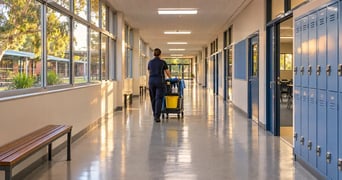
Daily cleaning normally happens after the last bell, with a day cleaner or general assistant handling spills and toilet checks during the school day.
Toilets and amenities
- Clean and disinfect toilets, urinals, basins, taps and partitions.
- Mop floors and flush floor drains to stop odours.
- Restock toilet paper, hand towel and soap, and report low stock.
- Empty sanitary and general bins.
Classrooms and learning areas
- Empty bins, vacuum carpets and mop hard floors.
- Wipe cleared desks, benches, whiteboard trays, light switches and door handles.
- Spot clean marks on doors and walls at student height.
Canteen, staffroom and sick bay
- Canteen: clean food contact surfaces, sinks and floors once service ends, if the canteen is in your scope.
- Staffroom: benches, sinks, tables, microwave exterior and fridge handles.
- Sick bay: clean and disinfect the bed, pillow cover, bench and basin, and follow the school's procedure after any bodily fluid incident.
Shared spaces
- Corridors and stairwells: vacuum or mop, wipe handrails.
- Reception: floor, counter and glass entry doors.
- COLAs and outdoor seating: litter and spills, if included.
Weekly school cleaning checklist
- Clean internal glass and door vision panels.
- Dust skirting boards, window sills and ledges within reach.
- Clean staffroom appliances inside and out.
- Machine scrub entries and the busiest corridors.
- Clean bubblers and drinking fountains thoroughly.
- Wipe chair legs and desk frames in rotation, a few rooms each week.
Term-break checklist
The two-week breaks between terms suit work that needs empty rooms but not a long shutdown:
- Carpet spot treatment and extraction of high-traffic lanes.
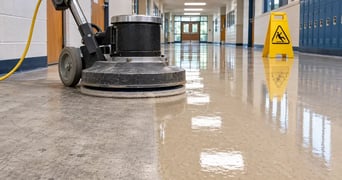
- Buffing hard floors that still have a sound finish.
- High dusting of vents, fans and light fittings, using the right access equipment.
- Cleaning lockers, cubbies and storage shelves.
- Hall and gym floors, following the floor manufacturer's care guide.
Specialist rooms and areas
Most school checklists stop at classrooms and toilets. The rooms below need their own line in the scope, because they need different products, different timing or a different person to clean them.
- Science labs: cleaners wipe floors, sinks and cleared benches only. Chemicals, glassware and fume cupboards stay with the lab technician or science staff, and the scope should say so.
- Art and technology rooms: clay dust, paint and sawdust need wet mopping or a vacuum with a fine filter rather than dry sweeping, and sinks need clearing of paint and plaster.
- Hall and gym: sports floors are cleaned to the floor maker's care guide, usually with a dust mop and a damp mop rather than a wet scrub. Change rooms and showers are cleaned and disinfected like toilets.
- Library: vacuum carpets and soft seating, dust shelf tops within reach and wipe computer keyboards and desks with a product that suits electronics.
- Canteen: if the canteen is run by a P&C or a contractor, agree in writing who cleans food areas and equipment, because food safety duties sit with the food business.
- Playground, COLAs and bubblers: litter picks, spills and bubblers are often split between the cleaner and the general assistant. Write down who does which.
Who does what: a simple split
Gaps in a school cleaning program usually happen where two people each think the other is responsible. A short table in the contract avoids that:
| Task | Usually done by |
|---|---|
| Toilets, classrooms, corridors, offices, staffroom | Contract cleaner (after school) |
| Spills, vomit and toilet checks during the school day | Day cleaner or general assistant |
| Lab chemicals, glassware and equipment | Lab technician or science staff |
| Canteen food equipment | Canteen operator |
| Strip and seal, carpet extraction, high dusting | Contract cleaner as periodic work, quoted separately |
| Grounds, gutters and playground equipment | Grounds staff or maintenance contractor |
Use it as a starting point and adjust it to the staff you have. What matters is that every area has one named owner.
The summer holiday deep clean
Summer is the only break long enough to strip and seal vinyl, extract every carpet and clean each room top to bottom. For NSW public schools, Term 4 2026 ends on Thursday 17 December. In the Eastern division, staff development days for Term 1 2027 start on Thursday 28 January and students return on Wednesday 3 February (NSW Department of Education 2027 calendar). Independent and Catholic schools set their own dates, so plan from your own calendar.
Which rooms to prioritise
Schedule the rooms that need the longest drying or curing time first, and the rooms staff need first last of all:
- First: corridors and wet areas with vinyl that needs stripping and sealing, because the finish has to cure before furniture or foot traffic returns.
- Second: carpeted classrooms and libraries, so extraction has time to dry.
- Third: toilets and change rooms, for grout, partitions and behind fixtures.
- Last: the staffroom, front office and sick bay, which staff use on development days.
Plan it backwards from the day staff return
| Timing (illustrative) | What happens |
|---|---|
| Last week of Term 4 | Confirm scope, room list and access. Ask staff to clear desks, floors and wall displays. |
| First days of the break | Furniture moved out of rooms booked for floor work. Trades told which rooms are off limits. |
| Early January | Strip and seal and carpet extraction, room by room. |
| Mid January | Furniture returned once the finish has cured to the product's guidance, then a detail clean. |
| Week before staff return | Final inspection against the scope, touch-ups and spare days. |
Curing times depend on the product, number of coats and weather, so ask your contractor what their sealer needs before furniture goes back. Every school in a region wants floor work in the same weeks, and cleaning teams lose staff to leave over Christmas, so agree dates before Term 4 ends.
Products and hygiene basics
Routine school cleaning is mostly detergent and water. Disinfectant is used where it adds protection: toilets, change rooms, the sick bay and any surface contaminated with blood, vomit or other body fluids. A few rules keep the program safe and consistent:
- Use colour-coded cloths and mops so toilet equipment never reaches kitchens or classrooms.
- Follow the label for dilution and contact time, and keep safety data sheets on site.
- Store chemicals in a locked cleaner's room, never in classrooms or student toilets.
- Keep a spill kit with gloves, absorbent and disposal bags where staff can reach it quickly.
- During gastro or flu outbreaks, increase how often high-touch surfaces are cleaned and follow the advice of your local public health unit.
For the difference between the terms, see our guide to cleaning vs sanitising.
When contractors can access the school
Write access into the scope so nobody is locked out on the first day of the break:
- Daily cleaning: usually from the last bell until the building is locked, with cleaners signing in at the office or using an agreed key process.
- Holidays: confirm which days the site is open, who holds keys and alarm codes, and whether a staff member must be on site.
- Trades: list builders, electricians or IT installers working over the break, so floor work isn't walked on before it cures.
- Child safety: the Office of the Children's Guardian lists providing cleaning services to a school as work that needs a Working With Children Check (Office of the Children's Guardian). Ask how relief cleaners are checked too.
What to include in your quote request
An accurate quote needs more than "clean the school". Send your contractor:
- Number of buildings, classrooms, toilets and specialist rooms such as labs, kitchens and the hall.
- Floor types and rough areas: carpet, vinyl, timber or sports flooring.
- Rooms you want stripped and sealed or carpet extracted over summer.
- Bell times, after-school care hours and any weekend hire.
- Your access dates for the summer break and the day staff return.
- Who supplies consumables such as toilet paper, hand towel and soap.
- How you want completed work recorded and inspected.
Our guide to choosing and managing a school cleaning contractor covers the selection side, and the commercial cleaning contract checklist lists the clauses to check before you sign.
How to check the work
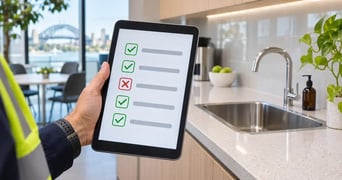
A checklist is only useful if someone checks it is followed. Walk a sample of toilets, classrooms and the staffroom before the first bell, at least monthly and more often in the first term of a new contract. Record fails with a photo and agree when they will be fixed. Our cleaning audit checklist includes a scoring template you can adapt for a school.
Frequently asked questions
How often should school toilets be cleaned?
At least once a day after the last bell, with a check and restock during the school day. Busy primary school toilets often need a midday clean of basins, floors and bins as well.
Who cleans NSW public schools?
Since 1 January 2026, NSW public schools have been cleaned under Department of Education contracts, with specialist work such as carpet cleaning and high-access windows contracted separately. Independent and Catholic schools arrange their own cleaning.
Do school cleaners need a Working With Children Check?
The Office of the Children's Guardian lists providing cleaning services to a school as child-related work that needs a Working With Children Check. Ask your contractor to confirm checks for every cleaner, including relief staff.
When should we book the summer deep clean?
Before Term 4 ends. Floor work across a region is booked into the same few weeks, so lock in dates, room lists and access early.
Planning your school's cleaning for 2027?
B&K Services cleans schools and education campuses across Sydney, Wollongong and Nowra, with daily cleaning planned around bell times and summer floor work agreed in the scope. Send us your room list, floor types and staff return date and we'll quote the daily program and the holiday deep clean together. See school cleaning in Sydney, Wollongong or Nowra, or request a quote.
Summary
Pest control is crucial for businesses to prevent health risks, property damage, and reputation loss. Australia has many pests like termites, ants, and cockroaches, making regular pest management essential. Commercial properties should have pest control every three months, while food businesses may need monthly treatments. The frequency depends on factors like business type, location, and past infestations. DIY pest control is cheaper but less effective, time-consuming, and risky, whereas professional services ensure safe and long-lasting results. With over 30 years of experience, B&K Services provides expert pest control solutions to keep your property pest-free. Contact them today!