1300 136 954
 info@bnkservices.com.au

Read Time: 8 Min
Church Cleaning: How to Plan It Around Services, Halls and Heritage Interiors

A church is cleaned around its calendar, not a fixed roster. Sunday services, funerals, weddings, hall hire and weekday groups all leave different areas busy at different times, and many parish buildings include older timber, plaster or stone that needs a gentler approach than an office. This guide explains how to plan church cleaning in NSW: what to clean before services and after bookings, how to look after heritage interiors and carpets, who handles the hall kitchen, and how to keep high-level work and children's activities safe.
Plan cleaning around the parish calendar
Start with how the building is actually used across a typical month, then decide which areas need to be ready before every service and which can be cleaned after an event or on a periodic cycle.
- Before regular services: the worship space, entry and foyer, toilets and any area people gather in before and after the service.
- After funerals, weddings and large events: the areas those events used, cleaned soon enough that the next booking or service isn't affected.
- After hall bookings: the hall, its kitchen and toilets reset to an agreed standard so the next group finds them ready.
- Periodic work: carpet cleaning, floor restoration, high-level dusting and glass, planned for quieter weeks rather than the days before Easter, Christmas or a large wedding.
Share the booking diary with whoever cleans the church, and agree how late changes are communicated. A funeral booked on a Wednesday morning can change what needs doing that week.
Agree who cleans what
Many parishes rely on a mix of volunteers, hall hirers and a contractor. Problems usually come from the gaps between them, so write the split down:
- what hall hirers must do before they leave, such as clearing food, stacking chairs and removing rubbish;
- what kitchen volunteers clean during and after a function;
- what the contractor cleans, how often, and what is excluded;
- who checks the building before a service, and who they call if something has been missed.
Our commercial cleaning contract checklist covers the clauses worth agreeing in writing, and our cleaning audit checklist shows how to check the work against that scope.
Worship spaces, pews and heritage interiors
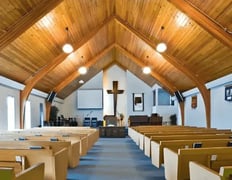
Pews, chairs, lecterns and rails are touched by everyone who attends, so they need regular dusting and wiping. Use a product suited to the finish and test anything new on a small, hidden area first, because older timber may have a traditional oil, wax, shellac or varnish finish rather than a modern coating.
If your church or its interior is heritage-listed or significant, take a cautious approach. The NSW Heritage Office's general guidance on carrying out work on heritage buildings (first published 1995, updated 2002) advises avoiding damage to original finishes such as wallpapers and decorative plasterwork, and notes that expert cleaning may be appropriate where those finishes are significant and relatively intact. For masonry, it advises cleaning only to remove harmful substances and to reveal deterioration, using a gentle method such as a low-pressure water spray, and consulting specialist cleaning companies if stains are difficult to remove.
That guidance is general. It doesn't set out cleaning methods for items such as stained glass, organs or memorials, so before anything beyond routine dusting and wiping, ask your parish, diocese or a heritage adviser who should handle them. In practice, routine cleaning of heritage areas should be light and non-abrasive.
Carpets and hall floors
Entries, aisles and foyers carry the most grit, so vacuum them regularly and remove spills before they set. For periodic deep cleaning, CHOICE notes that carpet manufacturers recommend hot water extraction (steam cleaning), and that carpet cleaned this way shouldn't take longer than six to eight hours to dry with proper ventilation. Schedule it so carpets are fully dry before the next service, for example early in the week rather than on a Saturday.
Church halls often have vinyl or other resilient floors that get heavy use from groups, functions and stacked furniture. Our guide to strip and seal explains the signs a floor needs restoring and the downtime to plan around bookings.
Hall kitchens and community meals
Hall kitchens are used for morning teas, funerals, community lunches and fundraisers, often by different groups. The NSW Food Authority explains that food laws for food businesses don't apply to food provided free of charge, but volunteers should still follow standard food safety practices. Groups selling food at fundraising events don't need to notify their council unless the food is potentially hazardous or isn't eaten straight after thorough cooking; the Authority's page explains what applies in those cases.
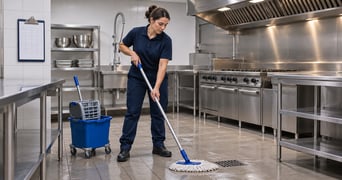
Whatever the activity, agree who cleans and sanitises benches, utensils and appliances after each use (usually the group that used the kitchen) and who cleans floors, sinks and bins on a routine visit (often the contractor). Store cleaning chemicals away from food and crockery; our guide to how chemicals should be stored in food premises explains why separation and labelling matter.
High-level cleaning and access
Churches often have high ceilings, exposed beams, pendant lights and tall windows. SafeWork NSW advises keeping three points of contact on a ladder, not climbing or working past the second-last rung, and considering alternatives such as scaffolding or an elevated work platform. High dusting, light fittings and upper glass are therefore best planned as periodic jobs with the right access equipment, not added to a routine clean before a service.
Children's programs and safeguarding
Playgroups, youth groups and children's programs often run in church halls during the week. The NSW Office of the Children's Guardian explains that people who don't work with children don't need a Working with Children Check. Its examples include people who provide cleaning services to a school, who do need a Check, and tradespeople who may only incidentally come into contact with children but don't work with them, who don't. It doesn't give a church cleaning example and notes that employers should check the legislation for exemptions, so treat it as a starting point rather than a ruling for your parish. Where possible, schedule cleaning outside children's activities, and agree with your contractor how cleaners will work if they need to be on site at the same time, in line with your own safeguarding policy.
Questions to ask a church cleaning contractor
- How will you schedule cleans around services, funerals, weddings and hall bookings, and how should we tell you about changes?
- Which areas will be cleaned before every service, and which after events or periodically?
- How will you treat heritage finishes, and what will you leave to specialists?
- How are high-level dusting and glass done safely?
- How will your cleaners work if children's programs are running?
- Who is our contact, and how is the work checked?
Frequently asked questions
How often should a church be cleaned?
Most churches need the worship space, entries and toilets cleaned before each regular service, with extra cleaning after funerals, weddings and busy hall bookings. Carpet cleaning, floor restoration and high-level work are usually scheduled periodically, depending on how heavily the building is used.
Can a contractor clean heritage areas?
Routine, gentle cleaning of floors, pews and touch points is usually fine. NSW Heritage Office guidance suggests expert cleaning may be appropriate for significant original finishes, and specialist advice for difficult stains on masonry. For items it doesn't cover, such as stained glass, ask your parish, diocese or a heritage adviser first.
Who should clean the hall kitchen after a function?
Usually the group that used the kitchen cleans and sanitises benches, utensils and appliances before leaving, and the contractor covers floors, sinks, bins and amenities on a routine visit. Write the split into the hall hire conditions and the cleaning scope.
Church cleaning in Sydney, Wollongong and Nowra
B&K Services plans church cleaning around each parish's services, funerals, weddings and hall bookings. During a site walkthrough we identify which areas need cleaning before every service and which follow events or a periodic cycle. Every cleaner is inducted on WHS obligations, safe chemical handling and site-specific risk assessments before their first shift, and our management system is certified to ISO 9001, ISO 14001 and ISO 45001. See our church cleaning services in Sydney, Wollongong and Nowra, or request a free quote.
Sources
- NSW Heritage Office, Heritage Information Series: How to carry out work on heritage buildings and sites (1995, updated 2002).
- CHOICE, How to find the best carpet cleaning option.
- NSW Food Authority, Charities, groups and volunteers.
- SafeWork NSW, Ladders.
- NSW Office of the Children's Guardian, Who needs a Check.
Summary
Pest control is crucial for businesses to prevent health risks, property damage, and reputation loss. Australia has many pests like termites, ants, and cockroaches, making regular pest management essential. Commercial properties should have pest control every three months, while food businesses may need monthly treatments. The frequency depends on factors like business type, location, and past infestations. DIY pest control is cheaper but less effective, time-consuming, and risky, whereas professional services ensure safe and long-lasting results. With over 30 years of experience, B&K Services provides expert pest control solutions to keep your property pest-free. Contact them today!