1300 136 954
 info@bnkservices.com.au

Read Time: 20 Min

Floors are slippery after mopping for one of four reasons: the floor is still wet, the cleaning product has left a residue, the mop and water are spreading dirt or grease rather than removing it, or the method doesn't suit the floor or its finish. The fix is to dilute the product to the label rate, use clean water and clean mop heads, rinse where residue builds up, and keep people off the area until it is fully dry. If the floor is still slippery once it's dry, the problem is usually built-up residue or a worn finish that needs periodic scrubbing or restoration. In some cases the surface itself needs an independent slip-resistance test.
This guide is for facilities, WHS, retail, hospitality, aged care, school, gym and office managers. It covers how to tell which cause you're dealing with, a safe mopping procedure your cleaners can follow, and what to change in your cleaning scope when the problem keeps coming back.
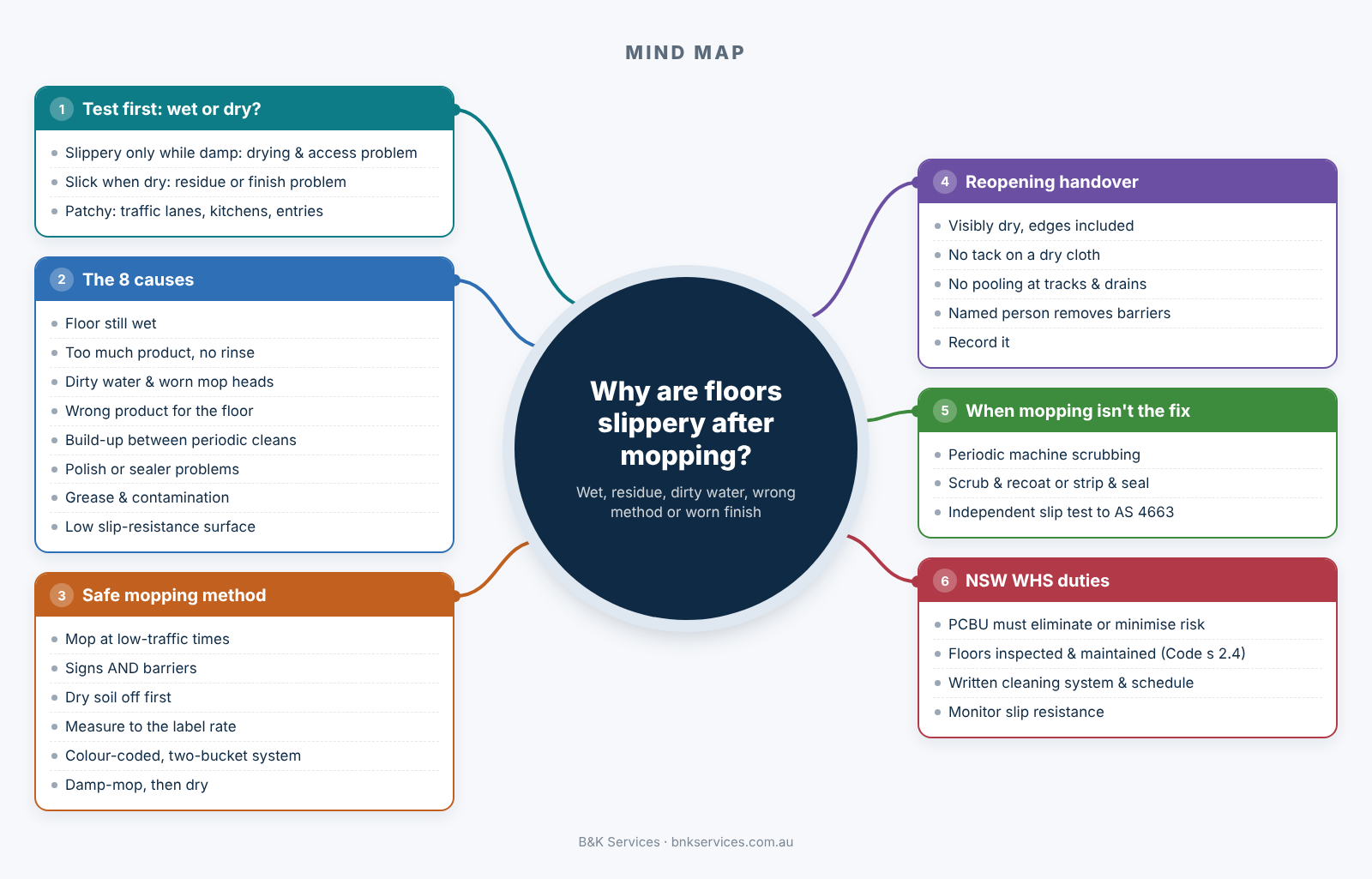
Why floors are slippery after mopping, at a glance
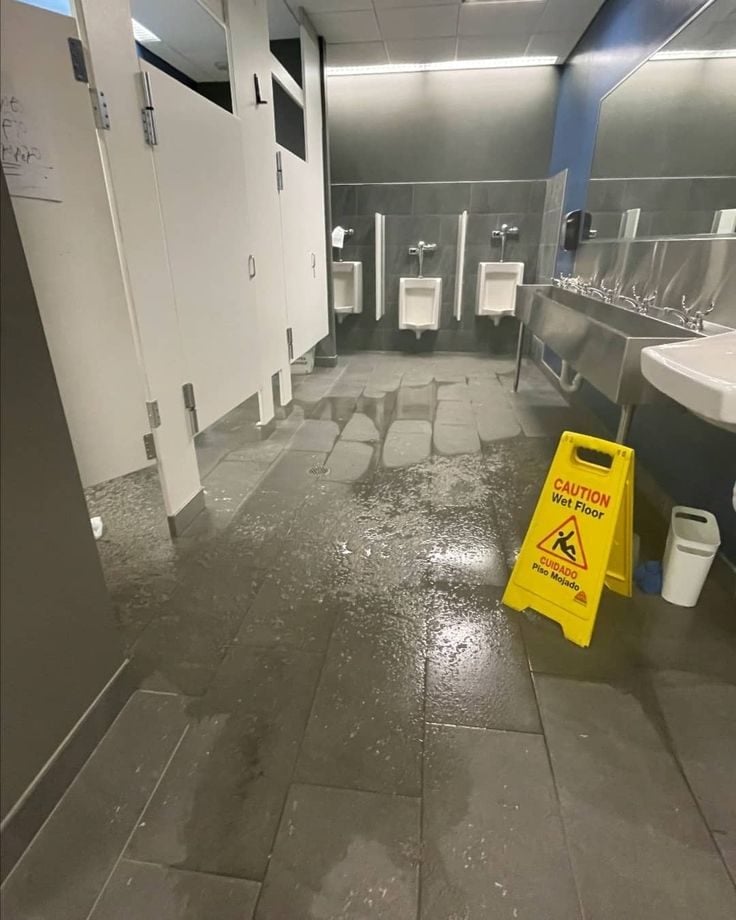
A sign warns people, but only a barrier keeps them off a wet floor.
Quick answer: the most common causes and fixes
- Still wet: the mop was too wet, or the area was opened before it dried. Fix: damp-mop, improve airflow, and keep barriers up until the floor is fully dry.
- Detergent residue: too much product, or no rinse. Fix: measure to the label rate and rinse with clean water where residue is building up.
- Dirty water or worn mop heads: soil and grease are being spread around. Fix: change the water often and use clean mop heads every shift.
- Wrong product or method for the floor: Fix: use a product and method suited to the flooring type, as the floor and chemical manufacturers direct.
- Build-up or worn finish: Fix: book periodic machine scrubbing, or a scrub and recoat, or a strip and seal.
- Still slippery after all of that: Fix: arrange an independent in-situ slip-resistance test and review the surface.
First question: is the floor slippery wet, or slippery dry?
This one observation tells you most of what you need to know, and it's where most guides stop short.
- Slippery only while it's damp, and fine once dry: this is a drying and access problem. Look at how much water is going down, how long the area takes to dry, and whether people are walking on it too soon.
- Slippery, slimy or tacky even when it looks dry: something has been left on the surface. That is usually detergent residue, soil or grease spread by the mop, or a polish or sealer problem. More mopping with the same method generally makes it worse.
- Slippery in some areas and not others: look at what's different about those areas: the traffic lanes, kitchen and servery zones, entries on rainy days, change rooms, or areas with a different floor finish.
Safe Work Australia's Guide to managing the risks of slips, trips and falls (September 2026) says that detergent residue build-up may unintentionally reduce grip. It lists poor cleaning, including failing to do the periodic deep cleaning that restores grip, as a common cause of poor grip. A floor that is "clean" but slick is a real cleaning-related hazard, not a perception problem.
Why floors get slippery after mopping: the causes in detail
1. The floor is still wet
A film of water between a shoe and a smooth floor is the most obvious cause. It gets worse when the mop is wet rather than damp, the weather is humid, the air is still, or the area is cleaned while people are moving through it. SafeWork NSW asks workplaces to check whether employees have to walk on floors that are wet from washing. Its guide to preventing slips, trips and falls at work recommends cleaning when foot traffic is at a minimum, and using safety barriers to keep pedestrians off areas that aren't yet fully dry.
2. Too much cleaning product, or no rinse
More product doesn't mean a cleaner floor. Detergent left on the surface dries into a film that can feel slick or slimy, and it gets slipperier again when the floor is re-wet by a spill or tracked-in water. SafeWork NSW's slips, trips and falls guidance specifically lists slippery floor surfaces resulting from cleaning products and methods. It asks whether there is an excessive residue of detergent. "Free-pouring" chemical into a bucket, or topping up a bucket with concentrate during the shift, are common ways this happens.
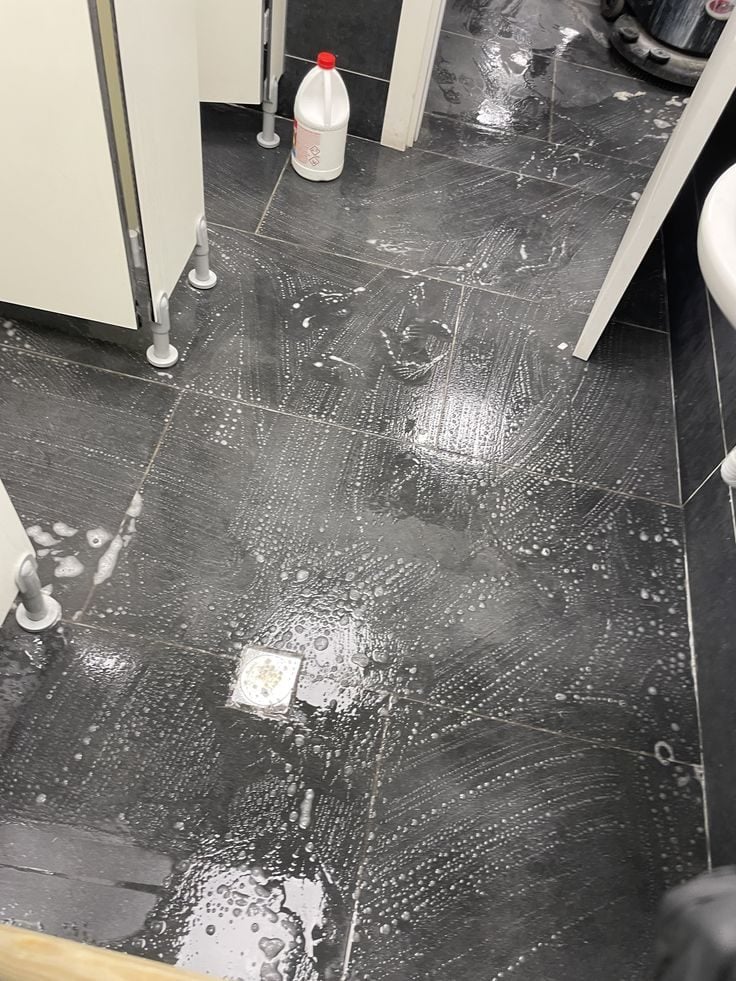
Too much product leaves a film like this, which turns slick when it's wet again.
3. Dirty water and worn mop heads
Once mop water turns grey, the mop is putting soil back down, along with the detergent. A worn or dirty mop head does the same thing. The result is a dull, streaky floor that feels gritty or greasy and goes slippery when wet. The SafeWork NSW guide includes using clean and suitable cleaning equipment as part of a reliable floor-cleaning system.
4. The product or method doesn't suit the floor
Vinyl, sealed timber, terrazzo, glazed tile, textured safety flooring, rubber and polished concrete all behave differently. A product that suits one can leave residue on another, or react with a finish. SafeWork NSW calls for cleaning products (including chemicals) and procedures that suit the type of flooring and follow the manufacturers' instructions. The product label and safety data sheet (SDS) are where your cleaner should get the dilution rate and any rinsing requirement. Don't rely on habit or on dilution ratios from a different product.
5. Residue and soil building up between periodic cleans
Daily mopping removes loose soil. It won't remove everything. Over weeks, residue and fine soil pack into grout lines, textured surfaces and the top layer of a floor finish. Safe Work Australia's guide names failure to do periodic deep cleaning as a cause of poor grip, and the SafeWork NSW guide recommends including periodic deep or comprehensive cleaning in the schedule. If the slipperiness has crept up over months, this is the likely cause.
6. Polish or sealer problems
Layers of floor polish, or a cleaner that softens or clouds the finish, can make a floor patchy: glossy and slick in some places, dull in others. As B&K's guide to strip and seal floors explains, a glossy floor is not necessarily slippery, but the finish, the cleaning products and water on the surface all affect grip. When the finish itself is the problem, mopping won't fix it.
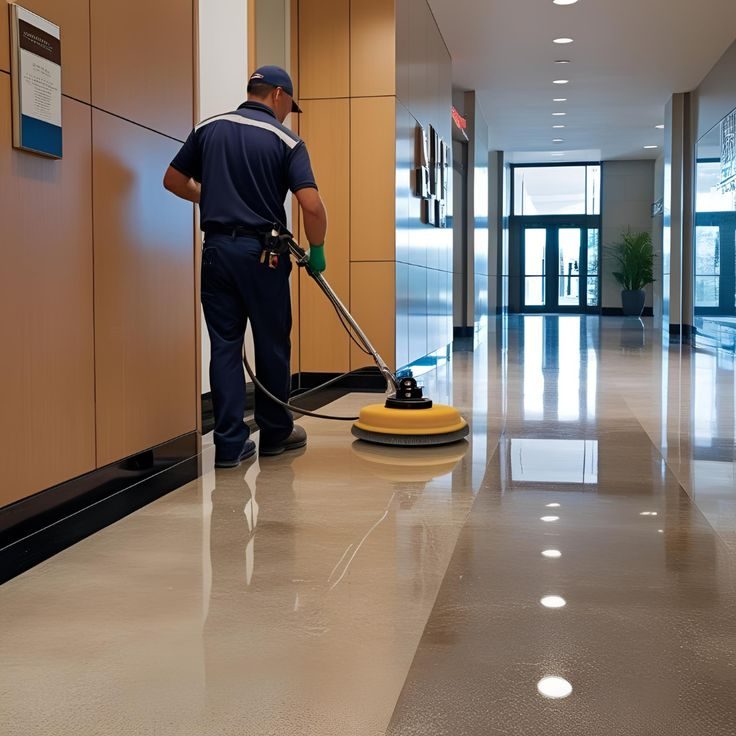
Gloss and grip are different things. The finish, the products and any water on top decide grip.
7. Contamination the mop can't lift
Kitchen grease, oil, sugary drinks, gym chalk and sweat, and rainwater tracked in at entries all need a specific approach. Mopping a greasy kitchen floor with a general-purpose detergent tends to spread a thin layer of grease across a larger area. SafeWork NSW lists contaminants and spills (liquids, water, grease, oil, dust or paper) as slip hazards in their own right.
8. The surface has low slip resistance when wet
Some floors are slippery when wet however well they're cleaned. SafeWork NSW notes, for example, that glazed ceramic tiles are slippery when wet, particularly with soapy water. Wear can also change a floor's slip resistance over time. If you've corrected the cleaning and the floor is still slippery, you need an objective measurement (see below).
Troubleshooting table: symptom, likely cause, fix
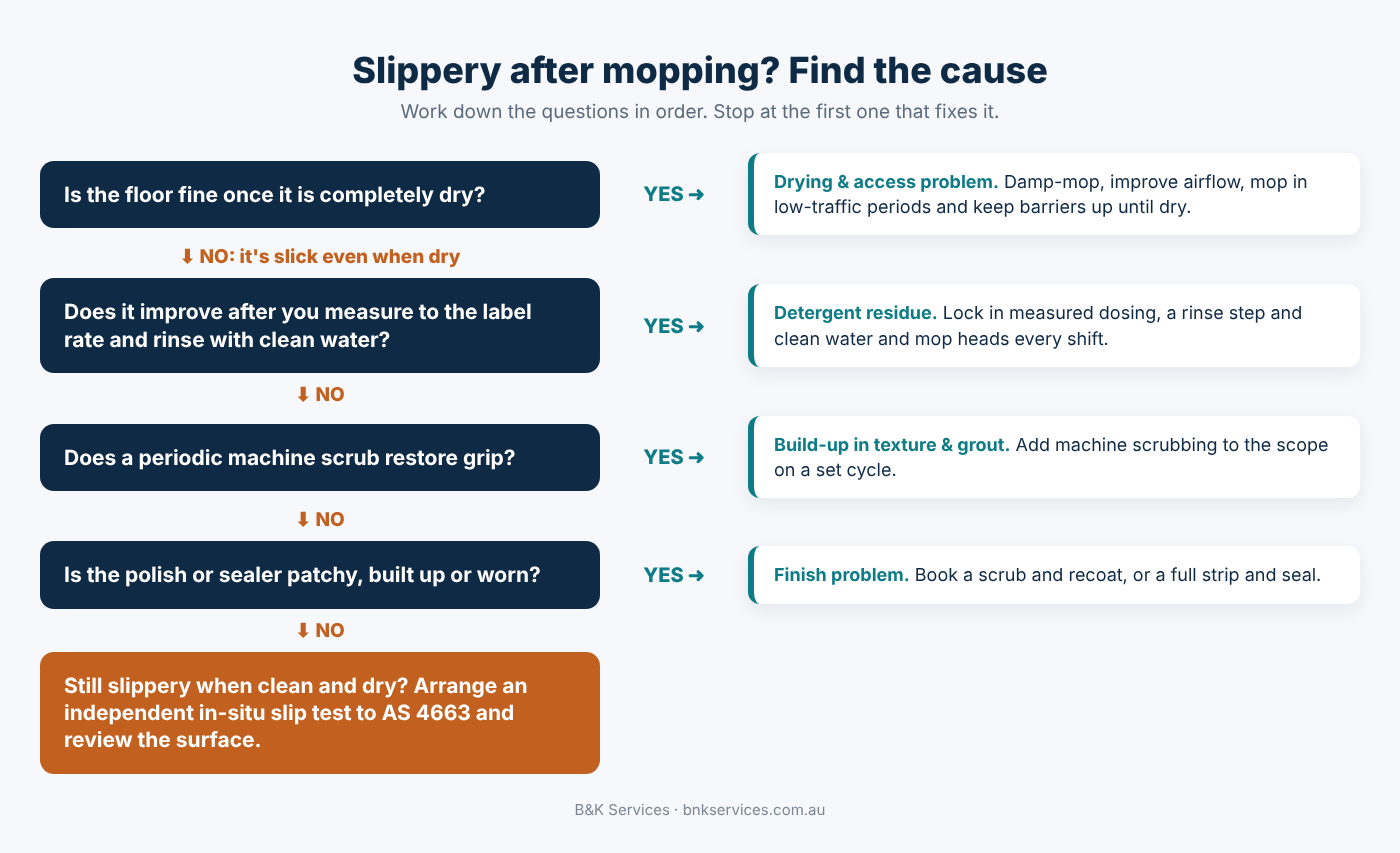
Work down the questions in order, then use the table for the detail.
| What you notice | Likely cause | What to do |
|---|---|---|
| Slippery only while damp; fine once dry | Too much water on the floor; slow drying; people walking on it too soon | Damp-mop rather than wet-mop, improve airflow, clean in low-traffic periods, and keep barriers in place until fully dry |
| Looks dry but feels slick or slimy, and worse when re-wet | Detergent residue from overdosing or no rinse | Measure product to the label rate and rinse with clean water. If residue has built up, book a machine scrub to remove it |
| Sticky or tacky underfoot; footprints show soon after cleaning | Residue holding soil; product unsuited to the floor; sugary spills spread by the mop | Spot-clean spills before mopping, remove the residue, and switch to a product the floor and chemical manufacturers recommend for that surface |
| Greasy film in kitchens or serveries after mopping | Grease being spread, not removed; water not changed often enough | Degrease and scrub, change the water frequently and rinse. Follow a scheduled kitchen floor routine |
| Grey streaks, haze or a gritty feel | Dirty mop water; worn or dirty mop heads | Change the water between areas, use clean mop heads each shift, and keep clean and dirty water separate |
| Glossy and slick in traffic lanes, dull at the edges | Polish or sealer build-up, a worn finish, or a cleaner that doesn't suit the finish | Have the finish assessed. It may need a scrub and recoat, or a full strip and seal |
| Textured safety floor feels smoother than it should | Soil packed into the texture; the mop glides over the top | Machine scrub with the brush or pad the flooring manufacturer recommends |
| Entries slippery on rainy days | Tracked-in water | Review entry matting, increase dry-mopping during wet weather, and use warning signs and barriers |
| Still slippery after the cleaning is corrected | The surface may have low slip resistance when wet, or has worn | Arrange an independent in-situ slip-resistance test and review surface options |
A safe mopping procedure for commercial sites
Use this as a starting point for your site's written procedure. Adjust it to your floor types, your products' labels and SDSs, and your site's risk assessment.
- Pick the time. Mop when traffic is lowest: before opening, after close, or between sessions. If a route has to stay in use, mop half the width at a time or provide another route.
- Set up controls before you start. Put out wet-floor signs and, where people could walk into the area, barriers or a cordon. Signs warn people; barriers keep them off.
- Remove dry soil first. Sweep or dust-mop so the mop isn't turning grit and dust into mud.
- Mix to the label rate. Measure the product with a measuring cup or dispenser, never by eye. Don't add extra concentrate during the shift, and don't mix different products unless the manufacturer says you can.
- Keep clean and dirty water apart. Use a two-bucket system or a divided bucket, so the mop goes back into clean solution rather than the water it just wrung out. Use colour-coded mops and buckets too, so a toilet mop never touches a kitchen or general floor. Our guide to colour-coded cleaning in Australia explains what each colour means.
- Damp-mop, not wet-mop. Wring the mop well. Work in small sections, starting at the far end and working back towards the exit so nobody has to cross wet floor.
- Change the water. Change it when it discolours and between areas, especially between kitchens, toilets and general floors.
- Rinse when needed. Rinse with clean water where the label calls for it, or where residue, tackiness or a slimy feel shows up.
- Dry the floor. Improve airflow and pick up any pooling at edges, thresholds and drains. In high-risk areas, use a dry mop or a machine that recovers water rather than leaving the floor to air-dry.
- Check before reopening. Run the handover check below. Only then remove the barriers and signs.
- Look after the equipment. Launder or replace mop heads, empty and rinse buckets, and dispose of dirty water through the site's approved route.
On large warehouse or retail floors, a scrubber-dryer usually suits better than a mop. B&K's warehouse cleaning checklist covers how to scrub without creating a slip hazard.
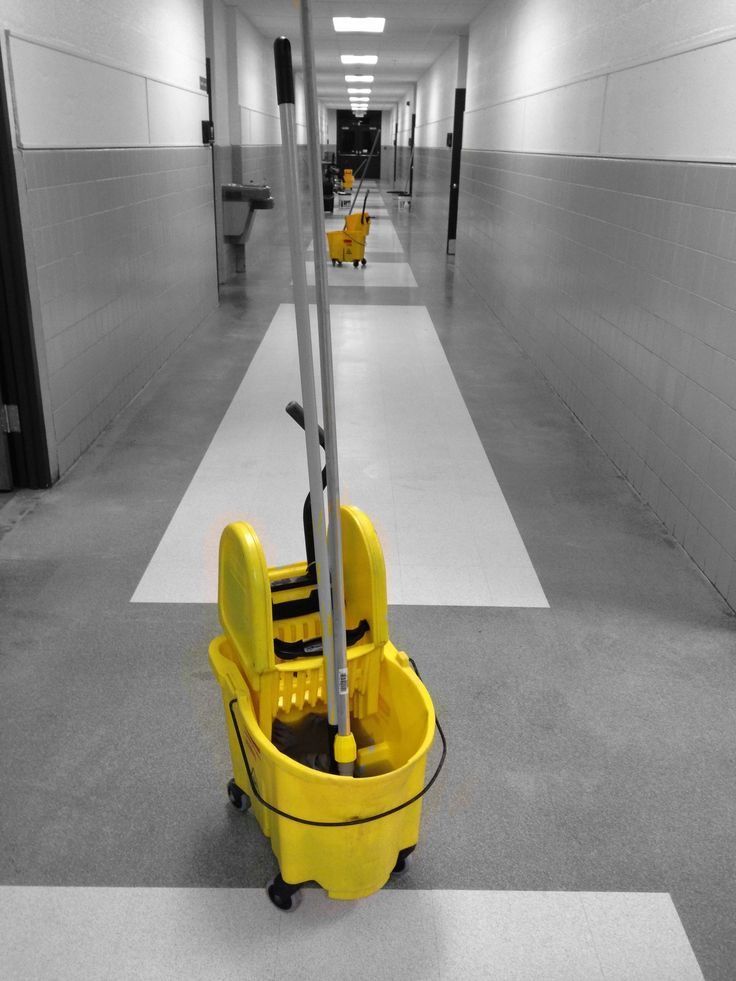
Long corridors are best mopped in half-widths so a dry route stays open.
Who decides a mopped floor can reopen? A five-point handover check
Many sites have no clear answer to who decides a floor is dry enough to reopen, and that is usually where incidents happen. Name the role in your cleaning scope (cleaner, shift supervisor or duty manager) and agree on what they check:
- Visibly dry everywhere, including edges, grout lines, thresholds, ramps and around drains.
- No tackiness or film when you wipe a clean, dry cloth across the surface.
- No pooling where water collects: door tracks, floor-level changes and under mats.
- Barriers and signs removed by the named person, not left out on a dry floor (which trains people to ignore them) and not removed early.
- Recorded, especially in aged care, healthcare and hospitality, or after a previous slip or near miss.
Safe Work Australia's checklist asks whether wet-floor warning signs, barriers or exclusion zones are used correctly. Where access to a slippery area can't be managed, its guide gives the example of blocking the route and providing a safe alternative.
What NSW WHS guidance says about slippery floors and cleaning
This is general information, not legal advice. Your site's risk assessment, and SafeWork NSW, are the authorities for your situation.
- The duty: under WHS laws, a person conducting a business or undertaking (PCBU) must eliminate slip, trip and fall risks so far as is reasonably practicable, and if that isn't possible, minimise them so far as is reasonably practicable (Safe Work Australia). Safe Work Australia lists "dry floors after cleaning" and having cleaning schedules in place among the controls.
- Floors and cleaning methods: the NSW Code of Practice Managing the work environment and facilities (section 2.4) says floors must be inspected regularly and maintained to eliminate or minimise slip and trip hazards. It also says cleaning methods should take account of the potential for slips.
- A cleaning system, not just a clean: SafeWork NSW recommends a floor-cleaning system, procedures and schedule. These include the correct products and procedures for the flooring type, clean equipment, cleaning at low-traffic times, barriers until floors are fully dry, and periodic deep cleaning.
- Working with cleaning contractors: SafeWork NSW's guide recommends consulting cleaning staff and contractors, and telling them about changes to flooring or work activities. Safe Work Australia's checklist asks whether contractors follow the site's housekeeping and cleaning expectations. Responsibility is shared, and it works best when it's written into the scope.
- Monitoring: Safe Work Australia's guide says slip resistance should be regularly monitored.
When mopping isn't the fix: scrubbing, strip and seal, or slip testing
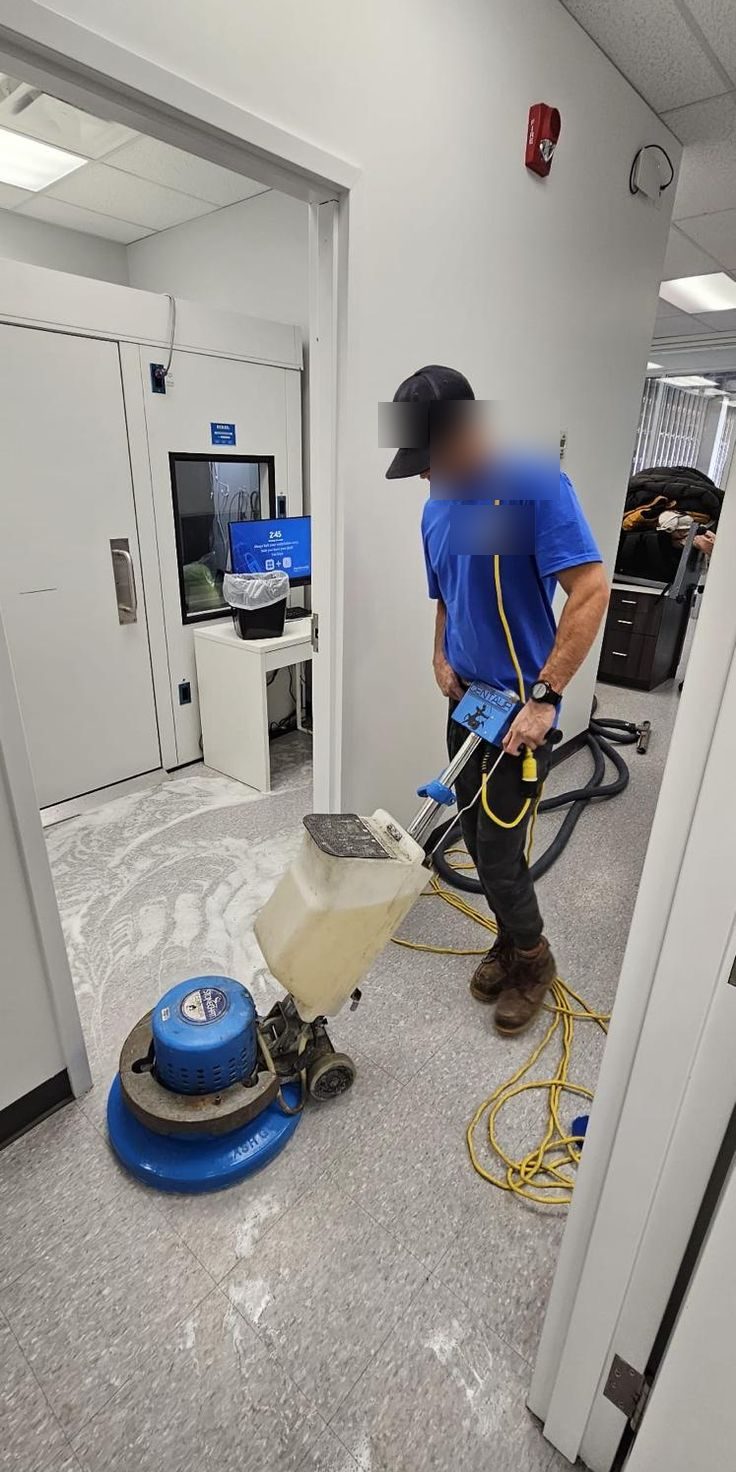
A periodic machine scrub removes the residue and soil that daily mopping leaves behind.
If you've corrected the dilution, water changes and drying and the floor is still slippery, work through these steps in order:
- Periodic machine scrubbing to remove the residue and soil that mopping leaves behind, especially in textured, grouted and high-traffic floors.
- Finish restoration: a scrub and recoat, or a full strip and seal for floors such as vinyl and linoleum where the finish has built up or worn. See Strip and Seal: What It Is, When Floors Need It and How to Book It.
- An independent slip-resistance test if the floor is still a concern after cleaning, or after an incident.
Which Australian Standard applies? AS 4663-2013, Slip resistance measurement of existing pedestrian surfaces, sets out methods for measuring the frictional characteristics of existing floors in wet and dry conditions. Standards Australia currently lists it as Pending Revision. AS 4586-2013 (with Amendment 1:2017), Slip resistance classification of new pedestrian surface materials, classifies new surface materials and is mainly used when specifying flooring. The handbook SA HB 198:2014 gives guidance on applying both. For a floor already in use, AS 4663 is the relevant measurement standard. Testing is specialist work for an independent slip-testing provider, who can tell you how the floor should be prepared beforehand.
Polished concrete needs its own care routine, because the wrong pad or chemical can dull the surface and change how it behaves underfoot. Follow the installer's or manufacturer's care instructions, and use only the pads and products they approve.
What changes from site to site
Offices
Kitchenettes, bathrooms and lift lobbies are the usual problem spots. Mopping after hours gives floors time to dry before staff arrive. Our after-hours vs daytime office cleaning guide covers the trade-offs. B&K's office cleaning in Sydney includes hard-floor care on an agreed cycle, with hard-floor scrubbing and sealing booked as periodic work.
Retail stores
Short cleaning windows around late closes and early openings mean floors are often opened before they're dry, and wet-weather entries are a constant risk. Periodic hard-floor work is best scheduled outside trading hours. See retail store cleaning in Sydney, Wollongong and Nowra.
Cafés, restaurants and commercial kitchens
Grease is the main issue, and general detergent plus a mop rarely removes it. Kitchen floors need degreasing and regular machine scrubbing, including grout lines. Our commercial kitchen cleaning checklist splits the daily and weekly floor tasks between staff and cleaners. Store floor chemicals as our guide to storing chemicals in food premises explains. For scoped cleaning between close and prep, see restaurant cleaning in Sydney.
Aged care
Residents move through corridors and dining rooms throughout the day, so keeping a safe route open matters as much as the clean. Mop in sections, keep handrail-side paths dry, and schedule machine work for low-occupancy periods. B&K's aged care cleaning in Sydney includes daily mopping, with machine scrubbing and floor scrubbing and sealing booked as periodic work.
Schools
Term-time mopping has to fit around students, so deeper floor work belongs in the holidays. B&K's school cleaning in Sydney schedules machine scrubbing and strip and seal for school holidays. Our school holiday floor cleaning plan sets it out room by room.
Gyms and fitness centres
Chalk, sweat and soap scum combine with constantly damp change rooms. Rubber flooring, mats and hard floors each need a method suited to the surface, and change rooms may need attention more than once a day. See gym cleaning in Sydney.
Warehouses
Large concrete or sealed floors, forklift routes and dock areas suit machine scrubbing with good water recovery better than mopping. See warehouse cleaning in Sydney.
What to ask your cleaning contractor when floors keep going slippery
If the problem keeps coming back, review the method and the scope rather than just asking for "more mopping". Ask:
- Which product is used on each floor type, and how is it measured? Is the SDS available on site?
- How often is mop water changed, and are clean and dirty water kept separate?
- How often are mop heads laundered or replaced?
- When is a rinse step used?
- How are wet areas cordoned off, and who decides when they reopen?
- Is periodic machine scrubbing, or finish maintenance, in the scope, and how often?
- What gets recorded after each clean and after any slip or near miss?
Check the answers against what you see on the floor using our cleaning audit checklist, which includes a check for sticky patches on hard floors. Make sure the agreed method is written into the contract. Our commercial cleaning contract checklist covers scope clauses.
What people ask about slippery floors online
Search forums and Reddit and the same questions keep coming up:
- Why does my floor feel sticky or weird after mopping? The answer cleaners give most often is too much cleaning solution, or a dirty mop head spreading soil around. Those are causes 2 and 3 above, and the fix is measured dosing, clean water and clean mop heads.
- Why is the floor slippery even though it's dry? That points to residue or a finish problem, not water. Work through the diagnosis flowchart above.
- Is it rude to walk across a floor someone is mopping? A Reddit thread on this sparked a wide debate. On a commercial site it shouldn't come down to manners: barriers and a dry alternative route should make the choice for people.
For everyday tips from cleaners and facility staff, browse r/CleaningTips on Reddit. Much of the advice there is for homes. Methods such as vinegar or steam mops don't suit every commercial floor or finish, so check the floor and product manufacturers' instructions before you change your routine.
Frequently asked questions
Why do my floors feel slimy after mopping?
A slimy feel on a floor that looks dry usually means detergent residue, often from using too much product or not rinsing. Re-wetting makes it worse. Measure the product to the label rate, rinse with clean water, and if the film has built up, have the floor machine scrubbed.
Why are my floors suddenly slippery?
Look for what changed: a new cleaning product, a new cleaner or contractor, a different dilution method, humid or wet weather, a recent polish or sealer application, or a missed periodic scrub. A sudden change usually points to the product or method rather than the floor itself.
How do you stop floors being slippery after mopping?
Dilute to the label rate, keep clean and dirty water separate, damp-mop rather than wet-mop, rinse where residue builds up, and keep people off the area until it's fully dry. Back this up with periodic machine scrubbing. If the floor is still slippery when clean and dry, get it independently tested.
Is a slippery floor a WHS hazard?
Yes. SafeWork NSW lists slippery floor surfaces resulting from cleaning products or methods as a slip hazard. PCBUs must eliminate or minimise slip risks so far as is reasonably practicable. That includes how and when floors are cleaned.
What is the Australian Standard for slip resistance?
AS 4663-2013 covers measuring the slip resistance of existing pedestrian surfaces. AS 4586-2013 (with Amendment 1:2017) covers classifying new surface materials. For a floor already in use, testing to AS 4663 is the relevant measurement.
Why is my vinyl floor slippery after mopping?
On commercial vinyl, the usual causes are detergent residue or a problem with the polish or sealer layer, such as build-up, wear, or a cleaner that doesn't suit the finish. If correcting the dilution and rinsing doesn't help, the finish may need a scrub and recoat or a strip and seal.
What colour mop should be used for bathrooms?
In most Australian colour-coding schemes, red is used for toilets and urinals. Charts differ on other washroom surfaces and on yellow, so follow the chart your site has adopted and keep it on the wall. See what each cleaning colour means.
How long should a mopped floor take to dry?
It depends on how wet the mop is, the floor, the temperature and the airflow, so there is no single figure. A well-wrung, damp mop dries far faster than a wet one. Keep barriers in place until the five-point handover check above is passed, not for a set number of minutes.
Does a shiny floor mean it's slippery?
Not necessarily. Gloss and grip are different things. What matters is the surface, the finish, what's left on it after cleaning, and whether it's wet.
Need help with slippery floors at your site?
B&K Services provides commercial cleaning across Sydney, Wollongong, Nowra and the Shoalhaven, with floor care built into a written scope and scheduled inspections. If your floors are slippery after every clean, we can walk through the site, look at the floor types and current method, and recommend the routine and periodic work that suits them. That might be hard-floor scrubbing and sealing for offices and aged care, or holiday machine scrubbing and vinyl floor strip and seal for schools. Slip-resistance testing is not part of our service; if your floor needs it, that's work for an independent specialist.
Request a quote or call 1300 136 954.
Sources
- Safe Work Australia: Guide to managing the risks of slips, trips and falls
- Safe Work Australia: Slips, trips and falls
- SafeWork NSW: Slips, trips and falls on the same level
- SafeWork NSW: Guide to preventing slips, trips and falls at work
- SafeWork NSW: Code of Practice, Managing the work environment and facilities
- Standards Australia: AS 4663-2013
- Standards Australia: AS 4586-2013 Amd 1:2017