1300 136 954
 info@bnkservices.com.au

Read Time: 13 Min

Most shops need their entry door glass spot-cleaned every day and the full ground-level shopfront cleaned weekly, or fortnightly on a quieter street. In offices and medical centres, glass doors and reception glass usually need a daily spot-clean, while internal partitions are spot-cleaned on routine visits and fully detailed about once a month. The right schedule for your site depends on foot traffic, how close you are to a busy road or the coast, and how much of your trade relies on first impressions.
The schedules below reflect typical practice in commercial cleaning, not a rule. We're not aware of any NSW regulation that sets how often shop or office glass must be cleaned, so treat these as a starting point and adjust them to what you see on your own glass.
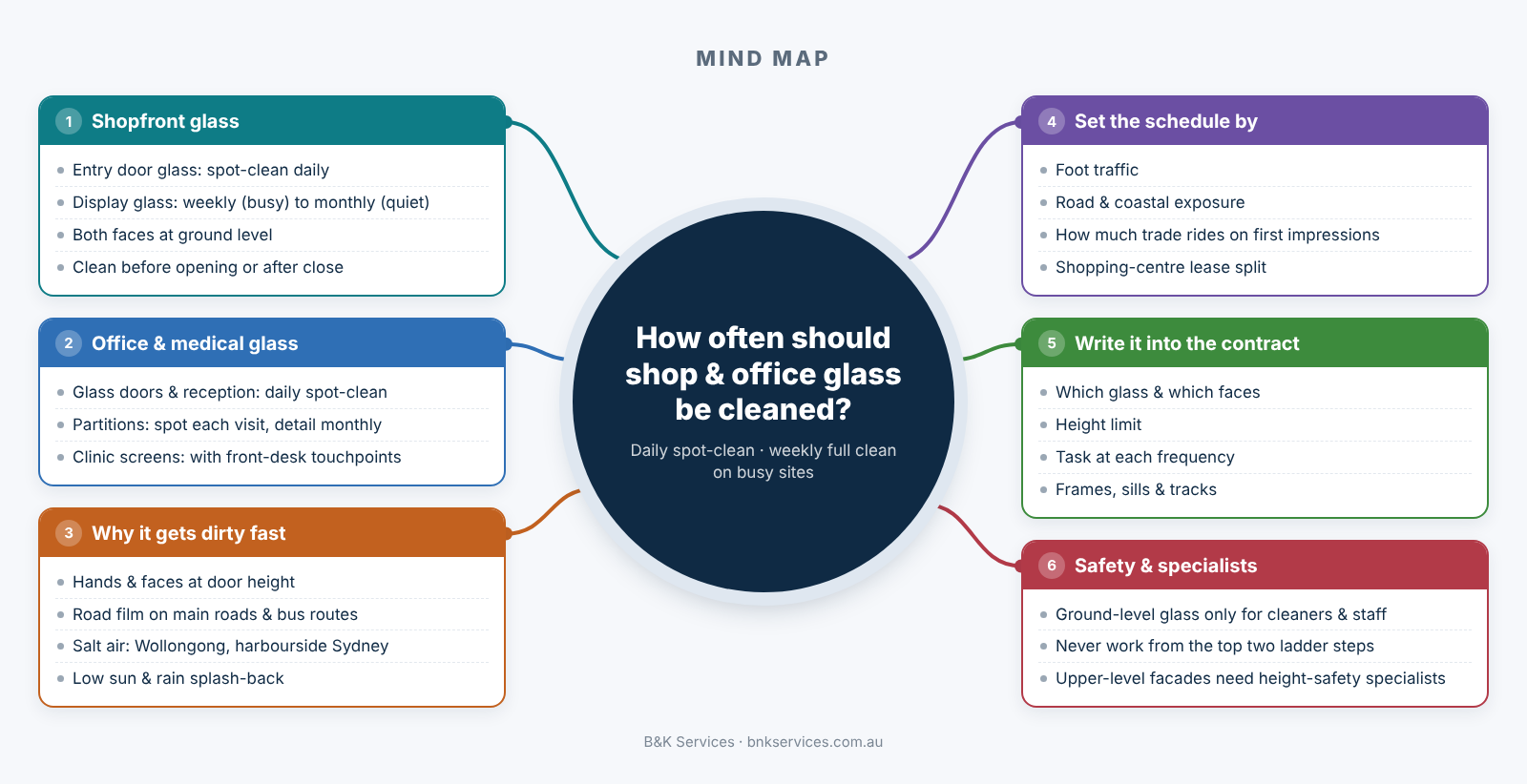
How often to clean shopfront and office glass, at a glance
Typical glass cleaning frequency by glass type and traffic
Typical practice for ground-level and internal commercial glass (a guide, not a regulation)
| Glass type | High traffic (busy strip, main road, shopping centre) | Moderate traffic | Low traffic (appointment-based, quiet street) |
|---|---|---|---|
| Entry door glass, handles and push plates | Spot-clean daily, often more than once | Spot-clean daily | Spot-clean 2–3 times a week |
| Shopfront display glass, outside face (ground level) | Full clean weekly | Full clean fortnightly | Full clean monthly |
| Shopfront display glass, inside face | Full clean weekly, spot-clean as needed | Full clean fortnightly | Full clean monthly |
| Retail counter and display cabinet glass | Spot-clean daily | Spot-clean daily or every visit | Spot-clean every visit |
| Office and medical reception glass, glass entry doors | Spot-clean daily, full clean weekly | Spot-clean every visit, full clean fortnightly | Spot-clean every visit, full clean monthly |
| Internal glass partitions and meeting-room glass | Spot-clean every visit, full detail monthly | Spot-clean weekly, full detail monthly | Spot-clean weekly, full detail every 1–3 months |
| Upper-level external and facade glass | Height-safety specialist, scoped separately | Height-safety specialist, scoped separately | Height-safety specialist, scoped separately |
Spot-clean means removing fingerprints, smudges and marks from the zones people touch and look through: handles, push plates and eye-level glass. Full clean or detail means the whole panel edge to edge, plus frames and sills.
Why shopfront glass looks dirty again by lunchtime
If your frontage looks clean at opening and tired by early afternoon, the schedule is usually missing a step, not failing outright. The common causes are:
- Hands and faces. Customers push doors in the same spot, children press against display windows and staff lean on counters. Prints build up fastest around the door handle and at child height.
- Road dust and traffic film. Shops on main roads and bus routes pick up a grey film on the outside face that a quick wipe smears rather than removes.
- Salt air. In coastal areas such as Wollongong and the Shoalhaven, and on harbourside strips such as Pyrmont and Barangaroo, salt spray leaves a haze on outward-facing glass, especially after windy days.
- Low sun. Morning or afternoon sun hitting a panel makes streaks and smears far more visible than they are in shade, so sun-facing glass needs more attention.
- Rain and wet weather. Splash-back from footpaths marks the lower part of the outside face.
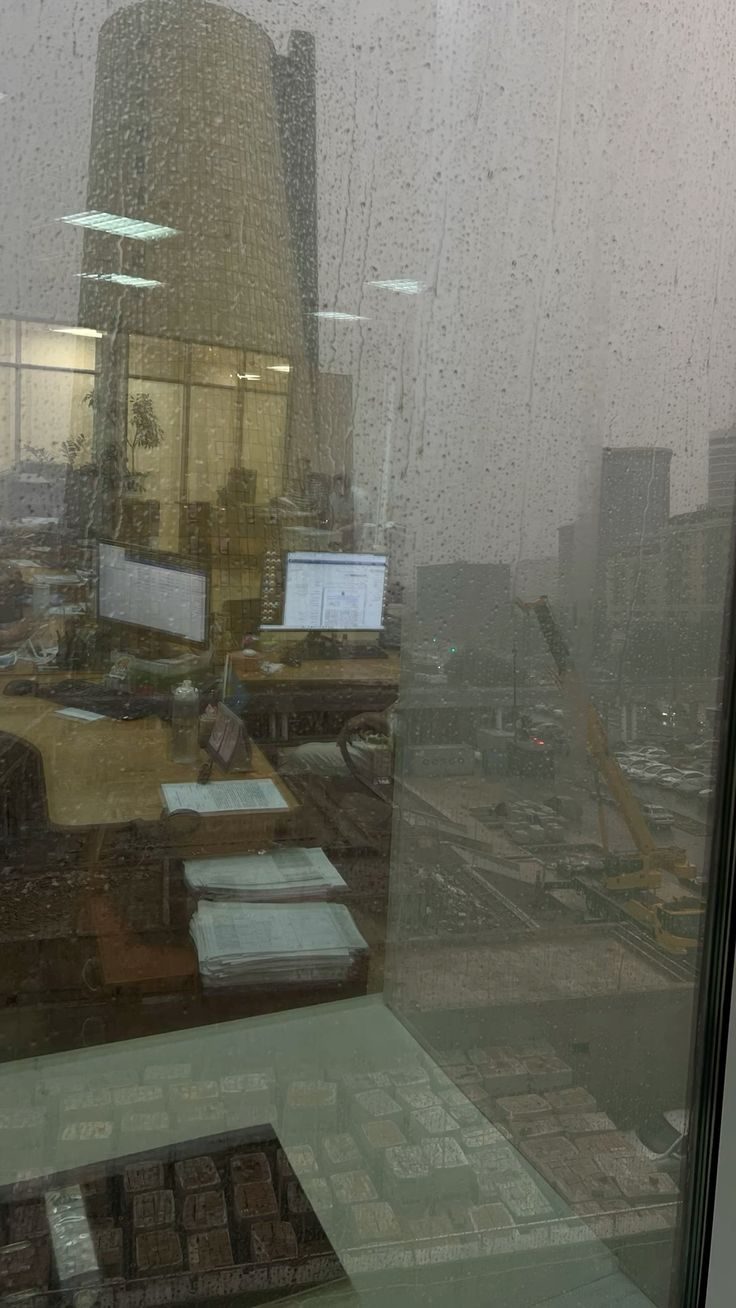
Rain leaves spots on the outside face, so plan a clean once the weather clears.
A full clean before opening, plus a short staff touch-up of the entry door around the middle of the day, solves the "dull by lunchtime" problem for most shops without adding another cleaning visit.
Setting a shopfront glass schedule for your store
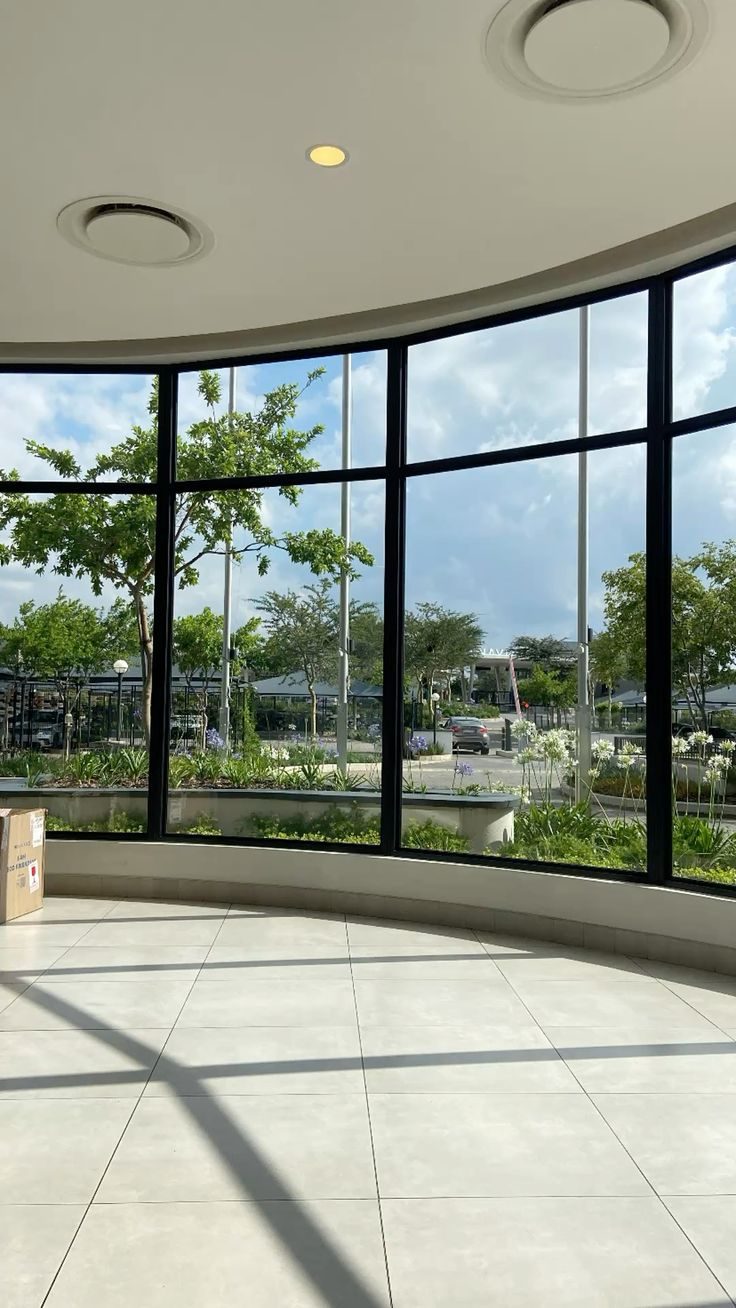
Ground-level frontage glass is the part of the building customers judge first.
Busy strip shops, cafés and main-road frontages
Plan on a weekly full clean of both faces of the ground-level glass, with entry door glass spot-cleaned daily. Food outlets and stores with heavy pram, pet or school foot traffic often need the door glass spot-cleaned more than once a day.
Quieter streets and appointment-based businesses
Showrooms, salons, professional offices with a street frontage and businesses on side streets can usually move to a fortnightly full clean, provided the entry door is still spot-cleaned regularly. If customers only arrive by appointment, schedule the spot-clean just before your first booking of the day.
Shopping centre tenancies
Inside a centre you usually only see the inside face of your glass, the entry and your internal glass, because common areas and the mall side are often handled by centre management. Check your lease and the centre's cleaning arrangements so you know exactly which panels are yours before you set a schedule. Busy centre precincts such as Burwood and Chatswood usually need the tenancy entry spot-cleaned more than once a day.
Car, furniture and homewares showrooms
Showrooms have large frontages under strong light, so streaks show early. Treat the full frontage like a busy shop: a weekly full clean and a daily spot-clean of entries and eye-level panels. Our showroom cleaning checklist covers the rest of the floor.
Before opening or after close?
Glass is best cleaned when no-one is touching it, so before opening or after close is ideal. An after-close clean means the shop opens to clear glass, but overnight dust and early-morning condensation can still show. A before-opening clean gives the freshest result for the first customers. B&K's retail store cleaning is scheduled before opening or after close, so shopfront glass is ready when your doors open. For the rest of the store, use our retail store cleaning checklist with daily, weekly and monthly tasks.
Office, reception and medical centre glass
Glass entry doors and reception
Reception is where visitors form their first impression, and glass doors there collect prints all day. A daily spot-clean of entry and reception glass, with a weekly or fortnightly full clean, suits most offices. If you have after-hours office cleaning, ask for reception glass to be done last so it's still clean when clients arrive.
Meeting rooms and internal partitions

Long runs of internal glass show prints at handle height and dust along the base.
Glass partitions get fewer hand marks than doors but show prints at handle height, smears where chairs and whiteboards touch, and dust along the base. Spot-cleaning during routine visits and fully detailing every panel once a month keeps most fit-outs looking sharp. Boardrooms used for client meetings often warrant a higher standard than general workspace glass. For everyday habits that keep the office cleaner between visits, see our office hygiene tips.
Medical centres and clinics
Reception glass, sliding doors and screens at the front desk are touched constantly by patients. Keep glass on the same daily spot-clean cycle as other front-desk touchpoints. For the wider infection-control routine, see our medical centre cleaning checklist.
Spot-cleaning vs full glass detailing: what your contract should say
"Glass cleaning" in a scope of works can mean anything from wiping prints off the front door to cleaning every panel edge to edge. When glass inclusions aren't spelled out, glass work can end up as a variation request. Before you agree a schedule, make sure the scope states:
- Which glass is included: shopfront panels, entry doors, internal partitions, display cabinets, counter glass, mirrors.
- Which faces: inside only, or inside and outside at ground level.
- The height limit: glass that can be reached safely from the floor, and who handles anything above that.
- The task at each frequency: for example, entry glass spot-cleaned daily and fully cleaned weekly; partitions spot-cleaned each visit and fully detailed monthly.
- Frames, sills and tracks: whether they're cleaned at the same time as the glass or on a separate periodic cycle.
- What staff handle between visits: usually only a quick touch-up of the entry door.
Our commercial cleaning contract checklist covers the other clauses worth checking, and the cleaning audit checklist shows how to check the work once it starts.
When you need a specialist window cleaner instead
B&K's glass work covers what can be reached safely from the ground or inside: shopfront glass, doors and internal glass at ground level in retail stores, and glass doors, internal partitions and sills in offices. Upper-level external windows and building facades are a different job. They need height-safety equipment, such as an elevating work platform, a building maintenance unit or rope access, and operators trained to use it. That work is scoped and quoted separately from a regular clean, so ask for a site assessment before you assume it is included.
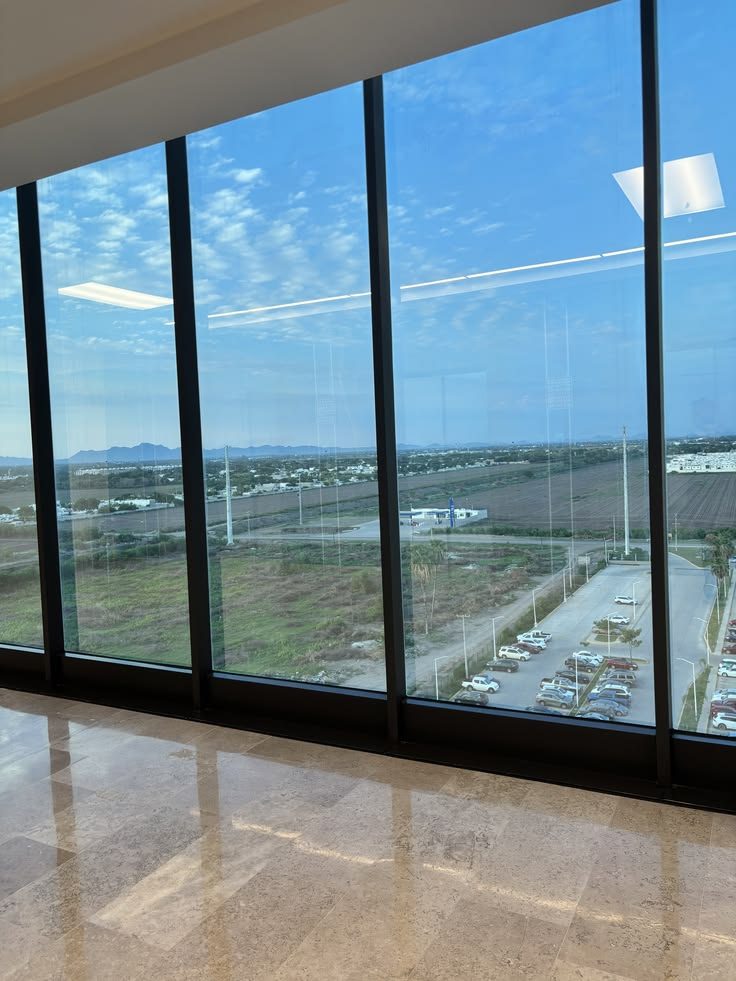
The outside face of upper-level glass like this can't be reached safely from the floor.
The reason is work health and safety. SafeWork NSW says businesses must protect workers from the risk of falling from one level to another, no matter the height. Its guidance says to avoid working at heights where you can and to work from the ground or a solid construction first. If that isn't possible, the business must provide protection against falls, starting with fall-prevention devices where reasonably practicable. Glass that can't be cleaned safely from the ground needs that equipment, training and planning, which is why it belongs with a specialist.
The same thinking applies to your own team. SafeWork NSW notes that many falls from A-frame step ladders happen when people work from the top two steps or over-reach. If staff do glass touch-ups between professional cleans, keep it to what they can reach from the floor.
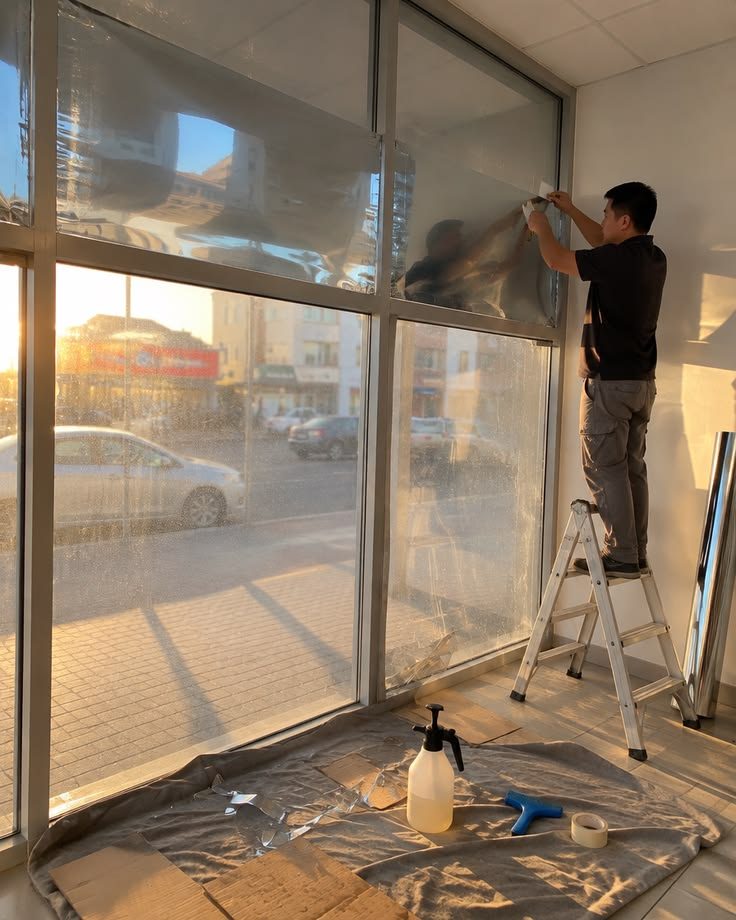
Avoid this: SafeWork NSW says many A-frame ladder falls happen on the top two steps or when over-reaching.
A simple daily and weekly glass routine for managers
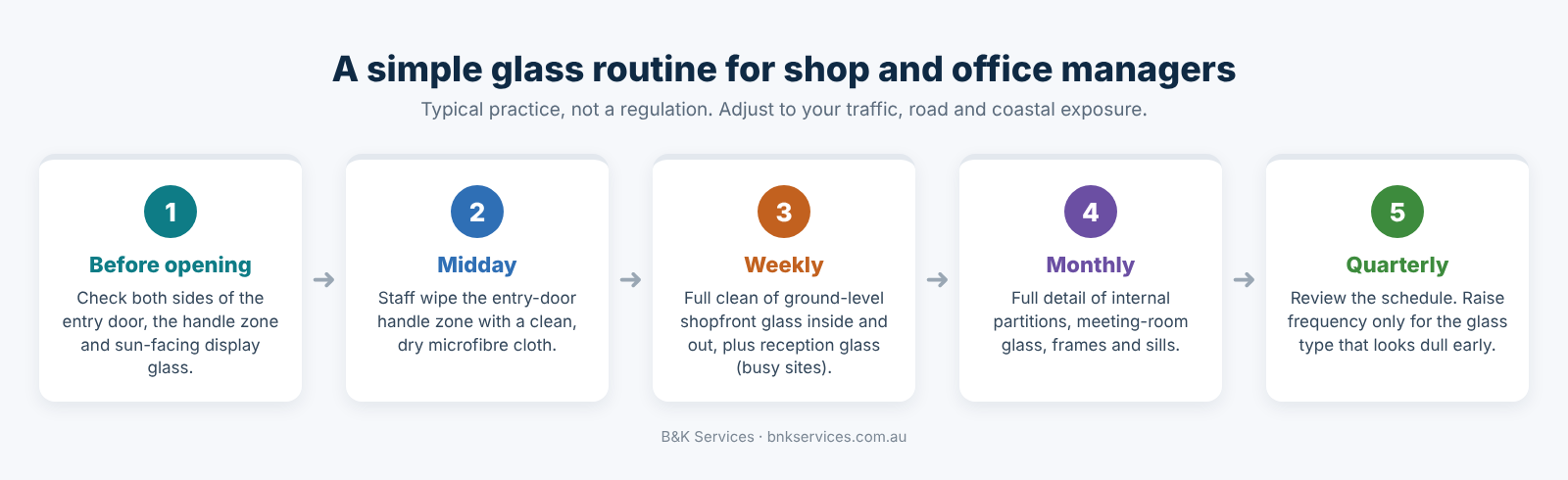
- Before opening: check both sides of the entry door, the handle zone and eye-level display glass, especially sun-facing panels.
- Midday: a staff member wipes the entry door handle zone with a clean, dry microfibre cloth.
- Weekly (busy sites): full clean of ground-level shopfront glass, inside and out, plus reception and entry glass.
- Monthly: full detail of internal partitions, meeting-room glass, frames and sills.
- Every quarter: review the schedule. If glass looks dull before the next clean is due, increase the frequency for that glass type only, not the whole site.
What people ask about shop window cleaning online
The same three questions come up again and again on window-cleaning forums and Reddit:
- How often do storefronts actually get done? On trade forums, window cleaners say most of their storefront clients book every two weeks, with the rest weekly or monthly, depending on budget and how much the business values its image. That sits right inside the weekly-to-fortnightly range in the table above.
- How do I stop fingerprints building up on glass doors? A regular question in Reddit's cleaning communities. You can't stop prints on a door people push all day, but you can schedule for them: a daily spot-clean at handle height plus a quick midday wipe by staff.
- Should shop staff be cleaning the windows? Retail staff often ask this on Reddit when window cleaning is added to their duties. Keep staff to floor-level touch-ups of the entry door, and leave full cleans and anything above head height to your cleaner.
To see how window cleaners talk about storefront rounds, browse the r/WindowCleaning community on Reddit. Treat it as practical experience from the trade, not as NSW safety guidance.
Frequently asked questions
Is shopfront glass cleaning included in commercial cleaning?
It depends on your written scope. Some cleaning contracts include ground-level and internal glass; others treat it as an extra or leave it out. Check that your scope lists which glass, which faces and how often. B&K includes shopfront glass, doors and internal glass at ground level in its retail cleaning scope.
Should my staff clean the shop windows or should the cleaner?
Most stores split the work. The cleaner does the full clean of the shopfront and internal glass before opening or after close, and staff do a quick touch-up of the entry door during the day. That keeps staff on the shop floor and avoids anyone climbing ladders to reach glass.
How often should office glass doors be cleaned?
Spot-clean them daily, because handles and push zones collect prints all day. Give them a full clean weekly in busy offices and fortnightly to monthly in quieter ones.
How often should glass partitions be cleaned?
Spot-clean partitions during routine visits, weekly at minimum, and fully detail every panel about once a month. Meeting rooms used for clients may need more frequent attention.
Does "daily glass cleaning" mean every panel gets cleaned every day?
Usually not. Daily glass cleaning normally means spot-cleaning the zones people touch and see, such as door glass and eye-level panels. Full edge-to-edge cleaning happens on a separate weekly, fortnightly or monthly cycle. Ask for both to be written into your scope.
Who is responsible for shopfront glass in a shopping centre?
It depends on your lease and the centre's arrangements. Tenants may be responsible for the inside of their shop and their entry, while centre management may handle common areas. Check your lease before you book a schedule, so neither side assumes the other is doing it.
Do shops near the coast need more frequent glass cleaning?
Often, yes. Salt air leaves a haze on outward-facing glass in coastal areas such as Wollongong and the Shoalhaven, so a weekly clean of the outside face may be needed even on a moderate-traffic street.
Can B&K clean upper-storey or external building windows?
B&K's regular retail and office cleaning covers ground-level shopfront glass, doors and internal glass. Scheduled commercial window cleaning is available as periodic work. Upper-level external windows and facades that need an elevating work platform, a building maintenance unit or rope access need a height-safety specialist, so ask for a site assessment and we'll tell you what can be done safely.
What is the best time of day to clean shop windows?
Before opening is best for the first customers, because overnight dust and condensation are gone. Avoid cleaning outside glass in direct, hot sun: the solution dries too fast and leaves streaks. On sun-facing frontages, clean early or once the glass is in shade.
Do I need to clean shop windows more often in winter or wet weather?
Usually only the outside face. Rain splash-back and road spray mark the lower part of the glass, so a quick clean of the outside face once the weather clears often does more than adding extra full cleans.
Get glass built into your regular clean
If your shopfront or reception glass looks tired before the next clean is due, the fix is usually a written glass schedule inside your regular cleaning scope. B&K includes ground-level shopfront glass, doors and internal glass in its retail store cleaning in Sydney, Wollongong and Nowra, and glass doors, partitions and reception glass in its office cleaning in Sydney, Wollongong and Nowra. Contact B&K to talk through a schedule for your site.