1300 136 954
 info@bnkservices.com.au

Read Time: 16 Min

A retail store cleaning checklist should list every zone of the shop (entrance, shopfront glass, sales floor, fitting rooms, checkout, toilets, staff areas and stockroom), then say how often each task happens and who does it. Organising tasks by zone and frequency means the jobs customers notice don't push out the ones nobody notices until they're missed.
When a checklist is built this way, gaps are easy to spot. A task without a frequency or a name next to it usually doesn't get done. Treat the schedule below as a starting point. Foot traffic, floor finishes, what you sell, and your lease or centre rules should decide the final version for your store.
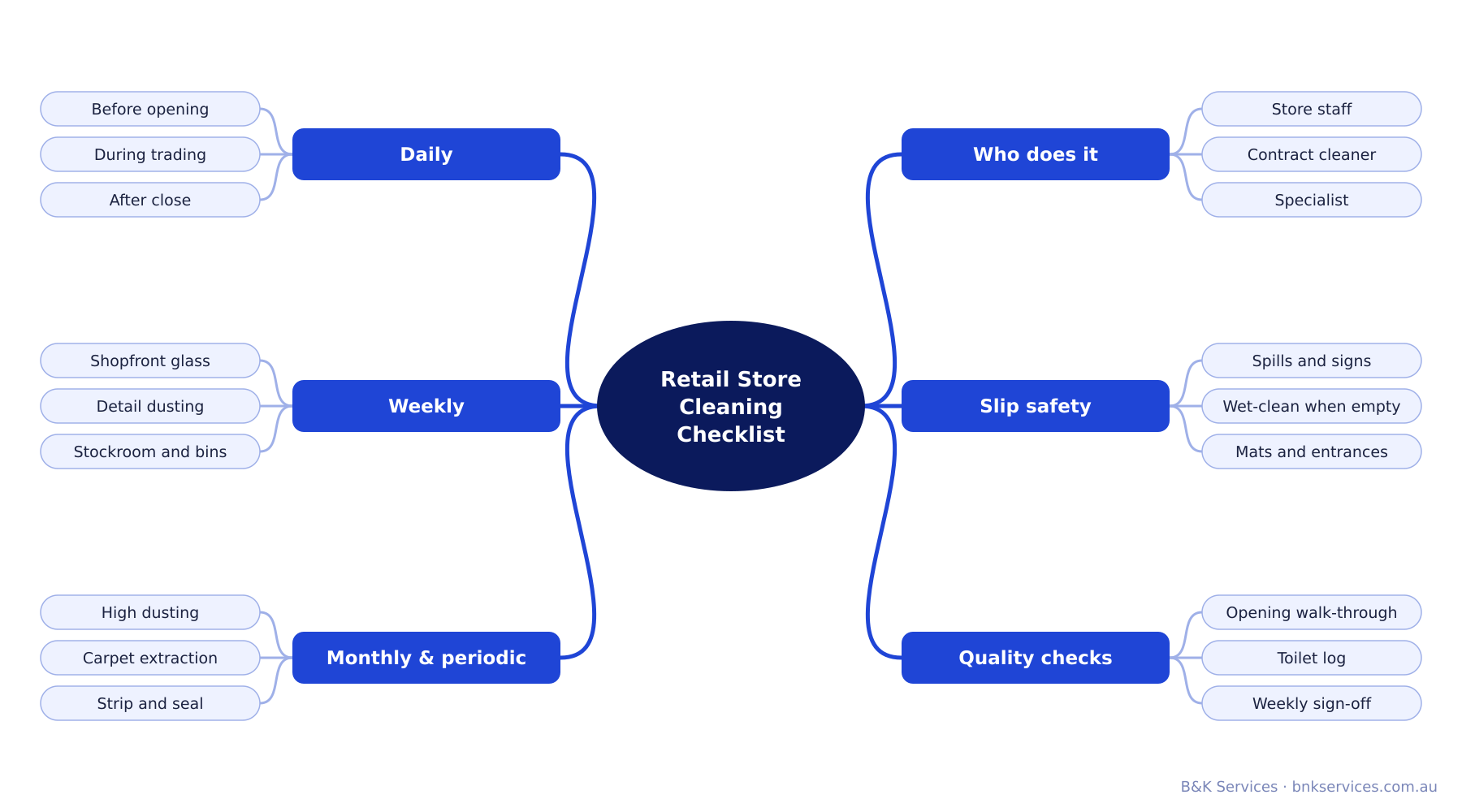
The retail store cleaning checklist at a glance
How to set cleaning frequency for your store
No single frequency suits every shop. A boutique with a few customers an hour has different needs from a discount store with queues at the registers. Four things matter most:
- Foot traffic. More people means more grit at the entrance, more handprints on glass and more visits to the fitting rooms. Busy stores need checks during trading as well as a full clean once a day.
- Surfaces and finishes. Vinyl, polished concrete, tile and carpet each need different methods and different periodic care.
- The cleaning window. Wet floor work and detail cleaning are safest when the shop is empty: before opening, after close or on a day the store doesn't trade.
- Tenancy boundaries. In a shopping centre, centre management usually looks after the mall, food court and shared amenities. Your lease and the centre's rules set where your responsibility begins, so check them before you assign the shopfront, threshold or nearby toilets to anyone.
Daily retail store cleaning checklist
Daily tasks fit into three windows. Splitting them this way shows what has to be done while customers are in the store and what can wait until the doors are locked.
Before opening
- Check the entrance, footpath or mall frontage you're responsible for and clear rubbish, leaves and grit.
- Spot-clean entrance doors, push plates and handles. Remove handprints from shopfront glass at hand height.
- Check that entrance mats lie flat and their edges aren't curling.
- Walk the sales floor and make sure it's dry, with no cartons, cables or stock in the aisles.
- Wipe the checkout counter, scanner, bag area and the area around the EFTPOS terminal. Clean the terminal itself as its maker recommends. Spraying product onto the cloth rather than the device is a sensible default.
- Check fitting rooms: mirrors, benches, hooks and floors clean, and nothing left behind from yesterday.
- Where you provide customer toilets, check they're clean and stocked with soap, paper and hand towels, and that bins have been emptied.
- Wipe basket and trolley handles if your store uses them.
During trading
- Spills: clean them up straight away, put out a wet floor sign and keep people away until the floor is dry.
- Entrance: check it more often in wet weather and swap a saturated mat for a dry one.
- Fitting rooms: clear go-backs, hangers, tags and pins after each use, or on a set round when it's busy.
- Checkout: wipe the counter and the EFTPOS area between rushes, and empty the counter bin.
- Touchpoints: do a round of door handles, push plates, handrails, tester stands and basket handles.
- Toilets: check and restock them on a regular round and record each check.
- Cardboard: take it off the sales floor promptly. Never leave it in walkways or in front of exits.
After close
- Vacuum carpet. Sweep and mop or scrub hard floors, including under display edges and behind the counter.
- Clean the checkout thoroughly. Dust and wipe displays and shelves within reach.
- Fully clean the fitting rooms: mirrors, benches, hooks, door handles and floors.
- Clean and restock customer and staff toilets.
- Clean the staff room or kitchenette: benches, sink, microwave, fridge handles and tables.
- Empty every bin, replace the liners and take rubbish and recycling to the agreed collection point.
- Clear stockroom walkways and exits, and sweep the busiest paths.
- Make sure wet floors will be dry before opening, and put cleaning equipment away.
Weekly retail cleaning checklist
Weekly tasks are detail work. They don't need doing every day, but if they're skipped for a few weeks the store starts to look tired.
- Clean ground-level shopfront glass inside and out, where the glass is your responsibility.
- Detail-dust shelving, fixtures, display plinths, signage holders and ledges.
- Clean under and behind movable displays and racks.
- Wipe skirting boards, door frames and kick plates.
- Clean entrance mats according to their type, and clean the floor underneath them.
- Machine-scrub or deep-mop busy hard floors if daily mopping isn't keeping up.
- Clean fitting-room walls, doors or curtains and seating, and look for marks or damage.
- Sweep and mop the whole stockroom floor, wipe shelving and clear out old packaging.
- Clean inside the staff microwave and the cupboard fronts. Clear out the fridge by staff agreement.
- Wash the bins themselves, not just the liners.
- Check stocks of cleaning products and consumables, and make sure safety data sheets (SDS) are available for any chemicals kept on site.
Monthly and periodic retail cleaning
Monthly and periodic work protects floors, fittings and the look of the store over the long term. How often it's needed depends on traffic, finish and how much the store depends on its appearance, so set these intervals with your cleaner instead of copying someone else's.
Monthly, or as needed
- High dusting: tops of fixtures, air vents and grilles, light fittings, hanging signage and ceiling displays. Use access equipment suited to the height, not a chair or a stack of stock.
- Clean behind and under heavy fixtures that aren't moved each week.
- Deep clean toilets, including grout, partitions and behind fixtures.
- Clean internal glass partitions and the inside of display cabinets.
- Check floors for wear, lifting edges, cracked tiles and loose carpet tiles, and report anything that needs repair.
Periodic (often quarterly to yearly, depending on use)
- Hot water extraction for carpet and carpet tiles.
- Scrub and recoat, or strip and seal, for vinyl floors with a protective finish.
- Polished concrete maintenance as the installer or finish supplier recommends.
- High or external glass that can't be reached safely from the ground.
- Pressure cleaning of entry paving, where the lease makes it your responsibility.
- Cleaning fitting-room seating and any fabric fixtures.
Book periodic floor and carpet work before a known busy period, not in the middle of it, and allow for a recovery clean afterwards.
Zone-by-zone retail cleaning schedule
Use this table as a template and change the frequencies to suit your store. "Staff" means store team members. "Cleaner" means your routine contract cleaner. "Specialist" means periodic work that needs specific equipment or access.
| Area | Task | Suggested frequency | Responsible person | Notes |
|---|---|---|---|---|
| Entrance and mats | Clear rubbish, check mats lie flat, spot-mop | Before opening, then during trading | Opening staff | Check more often in wet weather |
| Shopfront glass (ground level) | Remove handprints at door height | Daily | Staff or cleaner | Full clean inside and out weekly, or more often on busy roads |
| Sales floor (hard) | Sweep, then mop or scrub | Daily, after close | Cleaner | Leave enough time to dry before opening |
| Sales floor (carpet) | Vacuum, spot-clean stains | Daily | Cleaner | Extraction is periodic |
| Displays and shelving | Dust reachable surfaces | Touch-up daily, detail weekly | Staff (stock) and cleaner (fixtures) | Agree who moves merchandise |
| Fitting rooms | Clear items, check mirrors, benches and floors | After each use or on a set round | Sales staff | Full clean after close |
| Checkout and EFTPOS area | Wipe counter, scanner and terminal surround | Opening, during trading, close | Staff | Clean devices as their maker recommends |
| Customer touchpoints | Door handles, push plates, handrails, baskets | Several times a day | Staff | Add rounds when traffic is high |
| Customer toilets | Clean, restock, check | Full clean daily plus regular checks | Cleaner and staff | Keep a log on the door |
| Staff amenities | Benches, sink, appliances, tables, bins | Daily | Cleaner | Fridge clear-out weekly |
| Stockroom and receiving | Clear walkways and exits, remove cardboard | Daily, full sweep weekly | Staff | Keep fire exits clear at all times |
| Bins and waste | Empty and reline | Daily and during trading as needed | Cleaner and staff | Wash bins weekly |
| High areas, vents, lights | Dust | Monthly to quarterly | Cleaner or specialist | Needs suitable access equipment |
| Hard floor finish | Scrub and recoat, or strip and seal | Periodic | Specialist | Schedule after close |
| Carpet | Hot water extraction | Periodic | Specialist | Allow drying time before trading |
Opening and closing cleaning checklist for store managers
Short shift checklists get used. Long ones get skipped. Display these where the opening and closing staff will see them, and have each one initialled.
Opening checklist
- ☐ Entrance and frontage clear of rubbish and grit
- ☐ Mats flat, dry and in position
- ☐ Door glass and push plates spot-cleaned
- ☐ Sales floor dry and aisles clear
- ☐ Checkout counter and EFTPOS area wiped
- ☐ Fitting rooms empty and presentable
- ☐ Customer toilets clean and stocked (if provided)
- ☐ Wet floor signs and spill kit where staff can reach them
- ☐ Any problems left by the overnight clean noted and reported
Closing checklist
- ☐ Fitting rooms cleared and go-backs returned
- ☐ Sales floor cleared of stock, cartons and hangers
- ☐ Counter bins emptied and checkout tidied
- ☐ Cardboard flattened and taken to the agreed area
- ☐ Stockroom walkways and exits clear
- ☐ Spills or damage from the day reported to the cleaner
- ☐ Areas the cleaner needs to reach left unlocked or accessible, as agreed
If a contractor cleans after close, the closing checklist sets them up to work. The opening checklist is also the first quality check on their work.
Adjusting cleaning for busy trading periods
A schedule that works in a quiet month can fall behind quickly when trading changes. Review it before these periods, not during them.
- Christmas trading and sales events. More customers bring more stock deliveries, more cardboard, more fitting-room traffic and more pressure on toilets. Add rounds during trading, confirm your cleaner's access for any extended hours, and finish periodic floor or carpet work before the peak.
- High footfall. Check fitting rooms, toilets, entrances and checkouts more often. One extra round on a busy afternoon usually does more than a longer clean at night.
- Wet weather. Rain carried in on shoes and blown through doorways makes entrances slippery. Put out extra or larger mats if you have them, swap saturated ones, mop the entrance more often and keep signs out until the floor is dry.
- Extended opening hours. Later closing leaves less time for floors to dry before morning. You may need to move some tasks to an early-morning visit or change the order of work.
- Days the store doesn't trade. A planned closure can be a good time for deeper work. Check your state's trading rules and your centre's access arrangements first.
Floor types, wet floors and slip safety
Floors take more wear than anything else in a shop, and the wrong method can make them more slippery. Use the manufacturer's or installer's care instructions as the starting point for each floor.
| Floor type | Routine care | Periodic care | Watch for |
|---|---|---|---|
| Vinyl (sheet or tile) | Sweep and damp-mop with a suitable neutral cleaner | Scrub and recoat, or strip and seal | Residue build-up dulling the finish |
| Polished concrete | Dust-mop and auto-scrub | Maintenance as the installer recommends | Harsh chemicals damaging the finish |
| Ceramic or porcelain tile | Sweep and mop | Deep clean the grout | Grout lines holding dirt |
| Carpet or carpet tiles | Vacuum and spot-clean | Hot water extraction | Drying time and lifting tiles that become trip hazards |
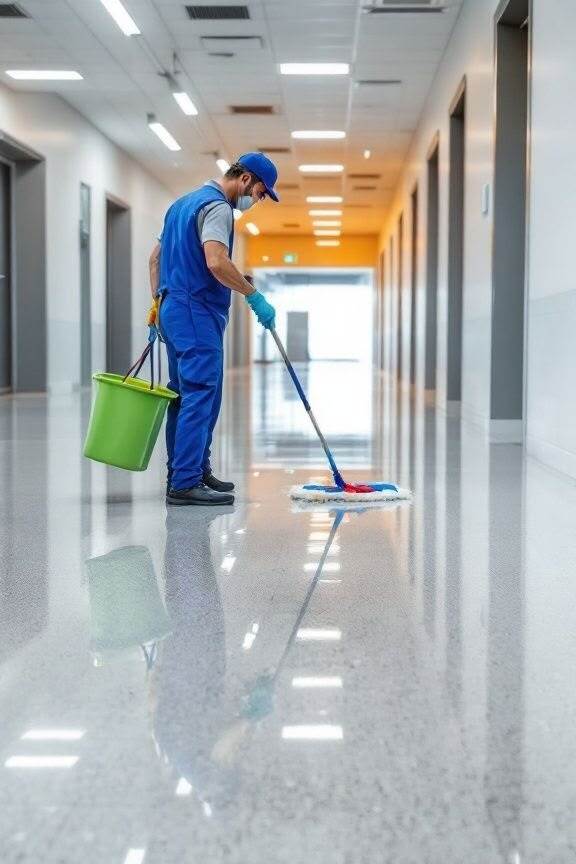
Safe Work Australia's slips, trips and falls guidance recommends having cleaning schedules in place and drying floors after cleaning. Its slips and trips fact sheet lists spills, wet cleaning methods and wind-driven rain through doorways among common slip hazards, and recommends cleaning up spills immediately and using signs to warn of wet areas. Workplace Health and Safety Queensland also notes that a build-up of cleaning product residue can reduce a floor's slip resistance, which is why correct dilution and rinsing matter.
In practice:
- Wet-clean floors when the store is empty wherever possible.
- If you have to wet-clean during trading, cordon off the area, put out signs and clean in sections so there is always a dry path.
- Keep a spill kit and wet floor signs where staff can reach them quickly.
- Report loose mats, lifting floor edges and damaged tiles to whoever handles repairs.
Under work health and safety laws, businesses have duties to manage these risks for workers and others in the workplace. SafeWork NSW's facilities at work guidance covers keeping workplace facilities, including toilets, clean, safe and in good working order. For your specific obligations, use the regulator's guidance or get advice. A cleaning checklist supports compliance but doesn't replace your own risk assessment.
Store staff versus a commercial cleaning contractor
Most stores divide the work. Problems tend to arise where nobody has decided who owns a task.
Usually handled by store staff
- Cleaning up spills and putting out signs during trading
- Resetting fitting rooms and returning go-backs
- Touchpoint rounds and wiping the checkout between customers
- Facing and dusting merchandise
- Removing cardboard and keeping walkways clear
Usually handled by a routine contract cleaner
- The full daily or scheduled clean before opening or after close
- Floors, toilets, staff amenities and bins
- Weekly detail tasks such as glass, fixtures and skirting
Often scheduled as periodic or specialist work
- Strip and seal, scrub and recoat, and carpet extraction
- High-level dusting and glass that needs access equipment
- Pressure cleaning of entries
Put the split in writing. List every task in the scope with a frequency, say who supplies consumables, and settle unclear areas such as the threshold, shopfront glass and shared amenities. Before you sign, this commercial cleaning contract checklist covers the clauses to review.
How to monitor cleaning quality
A checklist only helps if someone checks the work against it. A simple routine is enough for most stores:
- Do a daily opening walk-through. Take the same route every morning: entrance, sales floor, fitting rooms, checkout, toilets, staff room, stockroom. Ten minutes is usually enough.
- Mark each zone pass or fail. Write a short note and take a photo of anything that fails, and send it to the cleaner or their supervisor the same day.
- Keep a toilet log. A sheet on the door showing the time and initials of each check makes gaps obvious.
- Sign off each week. Review the week's notes with your cleaner and agree fixes for anything that keeps coming up.
- Review frequencies each month. If a zone fails often, it may need a more frequent task instead of a reminder.
For a more formal process with scoring, see B&K's guide to running a cleaning audit checklist.
Printable retail cleaning checklist
Copy this table into a document or spreadsheet, adjust the tasks to your store, and print one sheet a day. Tick the window in which each task was done and initial it.
Daily sign-off sheet
Store: ________ Date: ________
| Zone | Task | Before opening | During trading | After close | Initials | Notes |
|---|---|---|---|---|---|---|
| Entrance | Frontage clear, mats flat, glass spot-cleaned | ☐ | ☐ | ☐ | ||
| Sales floor | Aisles clear, spills cleaned, floor cleaned | ☐ | ☐ | ☐ | ||
| Displays | Dusted and tidy | ☐ | ☐ | |||
| Fitting rooms | Cleared, mirrors and benches clean | ☐ | ☐ | ☐ | ||
| Checkout | Counter and EFTPOS area wiped, bin emptied | ☐ | ☐ | ☐ | ||
| Touchpoints | Handles, push plates, handrails, baskets | ☐ | ☐ | ☐ | ||
| Customer toilets | Clean, stocked, log updated | ☐ | ☐ | ☐ | ||
| Staff amenities | Benches, sink, appliances, bins | ☐ | ||||
| Stockroom | Walkways and exits clear, cardboard removed | ☐ | ☐ | ☐ | ||
| Bins | Emptied and relined | ☐ | ☐ |
Manager check completed: ________
Issues reported to: ________
Weekly and monthly sign-off sheet
Week starting: ________
| Task | Frequency | Done (date) | Initials | Notes |
|---|---|---|---|---|
| Shopfront glass full clean | Weekly | |||
| Detail-dust fixtures and shelving | Weekly | |||
| Clean under and behind movable displays | Weekly | |||
| Clean mats and floor underneath | Weekly | |||
| Stockroom floor and shelving | Weekly | |||
| Wash bins | Weekly | |||
| High dusting, vents and lights | Monthly | |||
| Deep clean toilets | Monthly | |||
| Floor condition check | Monthly | |||
| Periodic floor or carpet work booked | As scheduled |
Frequently asked questions
How often should a retail store be cleaned?
Most stores need a full clean every trading day, usually before opening or after close, plus checks during trading for spills, fitting rooms, touchpoints and toilets. Detail tasks are usually weekly, and floor and carpet care is periodic. Busy stores need more frequent checks during trading than quiet ones.
What should be cleaned before a shop opens?
The entrance and mats, door glass and push plates, the checkout and EFTPOS area, fitting rooms, and customer toilets if you have them. The sales floor should be dry and the aisles clear before the first customer walks in.
How often should fitting rooms be checked during trading?
It depends on traffic. In a busy fashion store, checking after each customer or on a short set round keeps go-backs and rubbish under control. Quieter stores can check less often, but should still do a full clean after close.
Who cleans the shop entrance in a shopping centre?
It depends on your lease and the centre's rules. Centre management usually cleans the mall and common areas, while the tenant looks after the inside of the shop. The threshold and shopfront glass vary from centre to centre, so confirm them in writing.
Should retail staff or a contractor do the cleaning?
Usually both. Staff deal with what happens during trading: spills, fitting rooms, touchpoints and cardboard. A contractor does the full clean outside trading hours plus any periodic floor work. Write the split into the scope so nothing is missed.
Retail cleaning support in Sydney, Wollongong and Nowra
A good checklist shows what a clean store needs and who is responsible for each part. If the store team can't keep up with the out-of-hours work, or periodic floor care keeps slipping, a scoped cleaning program can take that work off their hands.
B&K Services cleans shop floors, entrances, checkouts, fitting rooms, bathrooms, staff rooms and stockrooms before opening or after close, along with periodic floor and carpet care. See the details for retail store cleaning in Sydney, retail store cleaning in Wollongong or retail store cleaning in Nowra. If you manage a whole centre, not a single tenancy, see shopping centre cleaning in Sydney.
Request a retail cleaning quote and tell us your trading hours, floor types and the tasks you'd like to hand over.
Summary
Pest control is crucial for businesses to prevent health risks, property damage, and reputation loss. Australia has many pests like termites, ants, and cockroaches, making regular pest management essential. Commercial properties should have pest control every three months, while food businesses may need monthly treatments. The frequency depends on factors like business type, location, and past infestations. DIY pest control is cheaper but less effective, time-consuming, and risky, whereas professional services ensure safe and long-lasting results. With over 30 years of experience, B&K Services provides expert pest control solutions to keep your property pest-free. Contact them today!